FoodieAtlas
Recipes around the World
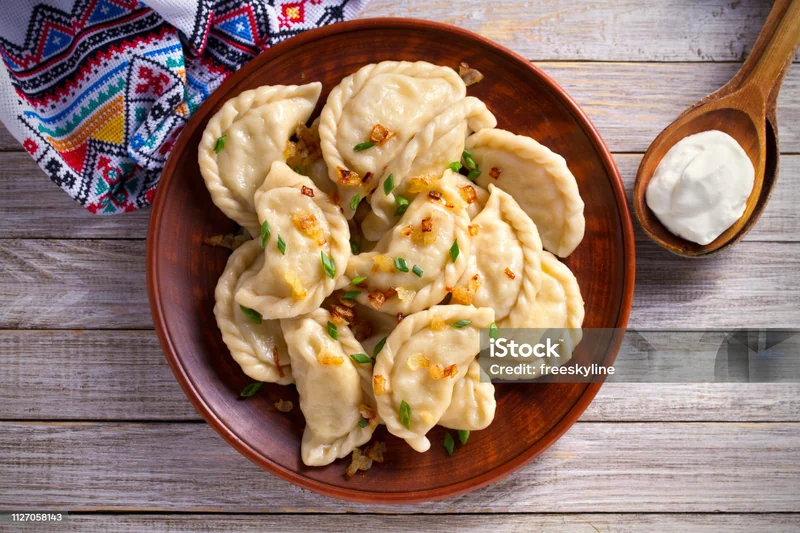
Pierogi are delightful Polish dumplings that have been a staple in Polish cuisine for centuries. Often filled with a variety of ingredients like potatoes, cheese, or meat, they hold a special place in Polish culture, being served during festive occasions and family gatherings. Enjoyed throughout the year, Pierogi are a comfort food that brings people together.
Mix the flour and salt in a large bowl and make a well. Add the eggs, sour cream and butter and mix into a dough.
Knead for about 5 minutes, until smooth and soft. Wrap and rest for at least 30 minutes.
Boil the potatoes in salted water until tender, about 20 minutes. Drain well and mash until smooth. Let them cool.
Fry the chopped onion in the butter until soft and golden. Mix it into the potatoes with the cheese. Season generously with salt and pepper.
Roll out the dough in batches on a floured surface to about 2–3 mm (1/8 inch) thick. Cut out circles about 7.5 cm (3 inches) across with a glass or cutter.
Place a heaped teaspoon of filling in the centre of each circle. Fold into a half moon and pinch the edges firmly to seal, pressing out any air.
Bring a large pot of salted water to a boil. Cook the pierogi in batches: once they float to the surface, cook for 2 more minutes, then lift out with a slotted spoon.
Fry the sliced onions in the butter until deep golden. Spoon over the pierogi, or fry the boiled pierogi briefly in the onion butter until lightly crisp.
Serve with sour cream.
Enjoy your meal!
Pierogi are traditional Polish dumplings, typically filled with savory or sweet ingredients, and are boiled or fried.
Pierogi originated in Poland and are deeply embedded in Polish culinary tradition.
The main ingredients include all-purpose flour, egg, sour cream, butter, and various fillings.
Allow about 2 h 15 min in total; much of that is hands-off waiting time.
Pierogi are often served with sour cream, sautéed onions, or a sprinkle of fresh herbs.