FoodieAtlas
Recipes around the World

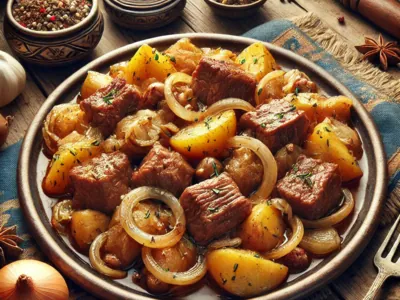
Beshbarmak is a beloved traditional dish in Kyrgyzstan, typically made with boiled meat and served over thin hand-cut boiled noodles. It holds significant cultural importance, often enjoyed during celebrations and gatherings, symbolizing hospitality and community. This hearty meal is not just food, but a way to bring people together.
Put the meat in a large pot, cover with cold water and bring to a boil. Skim off the foam, then add the halved onion, bay leaves, peppercorns and salt.
Cover partly and simmer gently for 2 hours, until the meat is falling off the bone. Skim 2-3 tablespoons of fat from the surface and set aside for the onions.
While the meat simmers, mix the flour, egg and salt, then add water little by little and knead into a firm, smooth dough. Cover and rest for 30 minutes.
Roll the dough out very thin on a floured surface, about 1-2 mm, and cut it into squares or diamonds of about 7-8 cm.
Put the sliced onions in a bowl, pour over the reserved fat, 1 cup of hot broth and the ground pepper. Cover and leave to soften while you finish the rest.
Lift the meat out of the pot and keep it warm. Strain the broth and bring it back to a boil. Drop in the noodle squares a few at a time and cook for 3-4 minutes, until tender. Lift them out with a slotted spoon onto a large platter.
Cut or tear the meat into small pieces and pile it on the noodles. Spoon the onions and their juices over the top and scatter with parsley or green onions.
Serve hot, with the rest of the broth (shorpo) in bowls on the side. Beshbarmak means five fingers, and it is traditionally eaten by hand.
Enjoy your meal!
Beshbarmak is a traditional Kyrgyz dish made with boiled meat, usually beef or lamb, served over thin hand-cut boiled noodles.
Beshbarmak originates from Kyrgyzstan, where it is often served at festive occasions and family gatherings.
The key ingredients include beef or lamb, onions, garlic, bay leaves, black peppercorns, salt and a simple flour and egg noodle dough.
Beshbarmak takes about 3 hours, most of it gentle simmering of the meat.
Beshbarmak is often served with a side of fresh salads or bread, and sometimes accompanied by broth from the meat.