FoodieAtlas
Recipes around the World
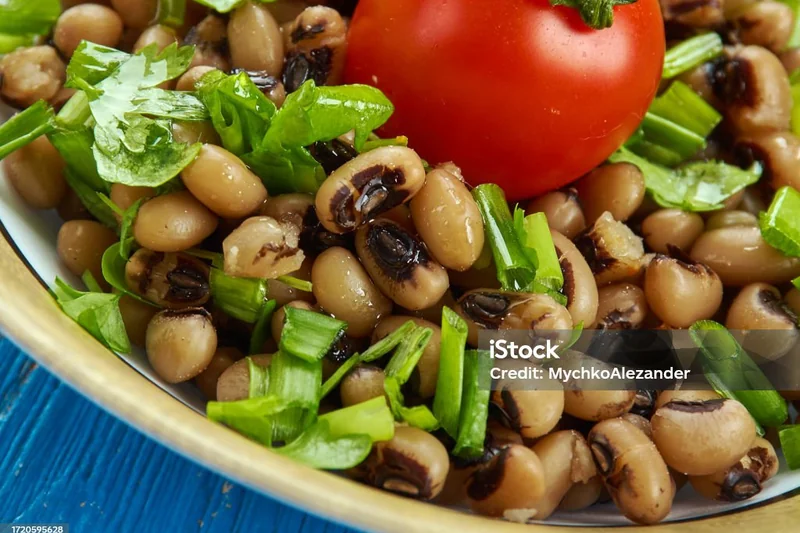
The creamy, slightly nutty taste of tender black-eyed peas mingles with the earthy bite of cooked wild greens and the brightness of fresh lemon and olive oil. Louvi is the Cypriot Lenten staple—eaten on fasting days throughout the year—because it's entirely plant-based but deeply satisfying. The dish's humble simplicity masks its importance: it sustained generations through lean seasons and religious observances, and its vegetarian nature gives it a distinct place in Cypriot cooking traditions.
Rinse the black-eyed peas, put them in a pot with plenty of cold water and boil for 5 minutes. Drain and rinse. Black-eyed peas do not need soaking.
Cover the beans with fresh water, add a pinch of salt and simmer for 20-25 minutes, until almost tender.
Add the chard stems (or zucchini) and cook for 5 minutes, then add the chard leaves and cook for 3-4 minutes more, until the beans are tender but still whole. Drain well.
While still warm, toss with the olive oil, lemon juice, salt, pepper and spring onions.
Serve warm or at room temperature with olives, tomatoes, cucumber, radishes and bread. On fasting days in Cyprus it is often eaten with tinned tuna or smoked herring on the side.
Louvi includes cooked wild greens or silverbeet (horta), which adds earthiness and nutrition. The olive oil and lemon dressing livens everything, turning simple beans into a balanced, textured salad. The greens also echo the Lenten aspect—abundant fresh vegetables during fasting periods.
Spinach works, though wild greens like amaranth or silverbeet are more traditional. They're slightly tougher and less watery, holding up better to the long cooking. Kale is modern but can work if cooked longer.
It contains no animal products, making it suitable for Orthodox fasting days. Black-eyed peas provide protein and satisfaction without meat, and the dish is inexpensive, making it accessible year-round but especially valued during restrictive periods.
Simple is best: olive oil and lemon are traditional. Some cooks add raw onion, garlic, or fresh herbs after cooking. Avoid heavy spices that would overpower the delicate greens and peas.
They should be tender enough to break between your teeth but not mushy. This usually takes 45 minutes to 1 hour after adding them to boiling liquid. Test frequently—older dried beans take longer.