FoodieAtlas
Recipes around the World
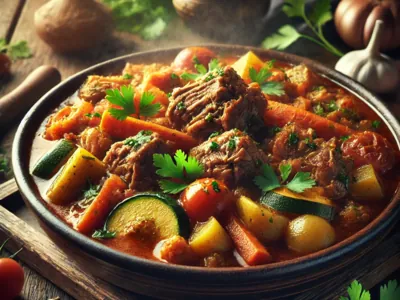
There is a hadith — a recorded saying of the Prophet Muhammad — that compares Aisha to thareed among women, suggesting this dish has been held in the highest regard for over 1,400 years, which makes it one of the few foods to appear in Islamic religious literature. The concept is simple but requires understanding: a meat and vegetable stew, spiced with cumin, coriander, turmeric, and cinnamon, is cooked until deeply flavored, then ladled hot over pieces of torn flatbread — regag (the Qatari paper-thin flatbread) or khobz — which collapse into the broth and turn into something between a dumpling and a soppy bread. The flatbread must be stale enough to absorb without disintegrating completely; fresh bread turns to paste. During Ramadan in Qatar, thareed is prepared in enormous quantities, filling the air of neighborhoods with its spiced, meaty fragrance as iftar approaches.
Heat the vegetable oil in a large pot or Dutch oven over medium heat.
Add the chopped onions and cook until softened and golden brown, about 5-7 minutes.
Stir in the minced garlic and cook for another minute.
Add the meat cubes to the pot and cook until browned on all sides.
Stir in the diced tomatoes and tomato paste, cooking for about 3-4 minutes until the tomatoes start to break down.
Add the ground cumin, ground coriander, ground turmeric, ground cinnamon, ground black pepper, ground paprika, ground allspice, ground cardamom, and salt. Mix well to coat the meat with the spices.
Add the potato chunks, sliced carrot, and any other vegetables you like to the pot.
Pour in the beef or chicken broth and bring to a boil.
Reduce the heat to low, cover the pot, and simmer for about 45-60 minutes, or until the meat and vegetables are tender.
Tear the flatbread or naan into pieces and add them to the pot.
Simmer for an additional 10-15 minutes, allowing the bread to soak up the flavors and thicken the stew.
Remove from heat and let it sit covered for 5 minutes before serving.
Garnish with fresh cilantro or parsley.
Thareed is a bread-and-stew dish central to Gulf Arab cuisine, in which spiced meat and vegetable stew is poured over torn pieces of flatbread. The bread is not served alongside the stew — it is inside it, slowly absorbing the broth as you eat. The result is a dish with no wasted liquid; everything becomes part of the eating experience. It is considered one of the oldest documented dishes in Arab culinary history.
Thareed predates Islam and appears in pre-Islamic poetry, but it became elevated through its mention in hadith literature, where the Prophet Muhammad praised it. This religious connection made thareed a symbolic and respected dish across the entire Arab world. In Qatar and the Gulf, it has particular prominence during Ramadan, where its bread-and-broth format provides sustained energy after fasting.
The stew component uses bone-in lamb or beef, tomatoes, tomato paste, potatoes, carrots, and a spice blend of cumin, coriander, turmeric, cinnamon, cardamom, paprika, and allspice. The bread component is traditionally regag — Qatar's paper-thin flatbread — or any unleavened flatbread that is a day old so it holds its structure as it absorbs the broth. The bread quantity and stew ratio determine the final texture: more bread creates a denser, more filling dish.
Use day-old flatbread rather than fresh — fresh bread turns to mush immediately, while stale bread maintains some texture as it soaks in the broth. Tear the bread into large pieces (palm-sized) rather than small ones so they do not completely dissolve. The stew should be more liquid than a typical Western stew so there is enough broth for the bread to absorb; add extra water or broth if needed before adding the bread.
Thareed is a complete one-dish meal and does not require side dishes, but cold laban (drinking yogurt) is the traditional accompaniment, drunk between bites to cool the palate. During Ramadan, dates and water are served alongside it as part of the iftar tradition. A small bowl of harissa (chili paste) or hot sauce can be offered on the side for those who want additional heat.