FoodieAtlas
Recipes around the World
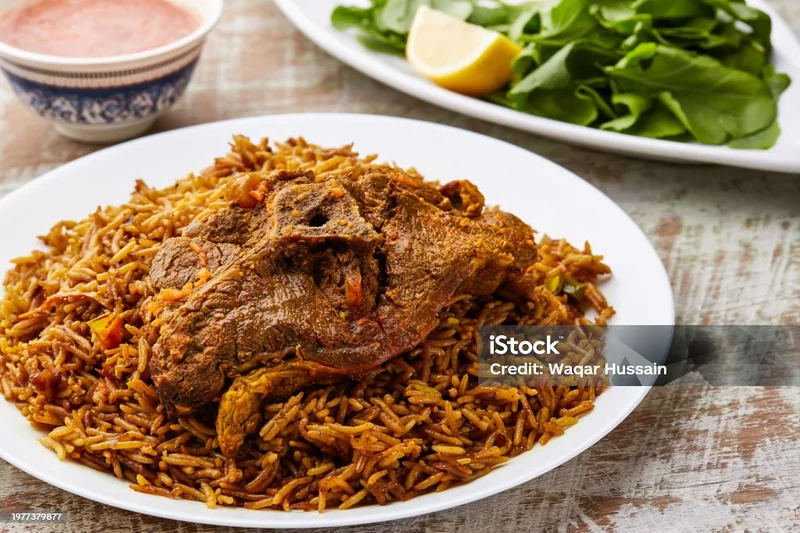
Lift the lid on a pot of machboos and a wave of steam rises carrying cardamom, cinnamon, turmeric, and something sharply citrusy — that is loomi, the Gulf's secret weapon, a sun-dried black lime that perfumes the entire dish with a concentrated tartness you cannot replicate with anything else. Machboos is considered Qatar's national dish, eaten at midday on Fridays after prayer when extended families gather, the rice mounded high with chicken pieces and scattered with crispy brown onion threads and fresh herbs. The dish traces its roots to the broader Arabian Peninsula spice trade, sharing DNA with similar one-pot rice dishes across Bahrain, Kuwait, and Oman — but each Gulf state has adjusted the spice proportions to claim it as their own. Cooking machboos properly means not rushing the chicken — the braise builds the flavor base that the rice then absorbs, and shortcuts in that stage produce flat results.
Heat the vegetable oil in a large pot or Dutch oven over medium heat.
Add the chopped onions and cook until softened and golden brown, about 5-7 minutes.
Stir in the minced garlic and cook for another minute.
Add the diced tomatoes and cook until they start to break down, about 3-4 minutes.
Stir in the tomato paste and cook for 2 minutes to combine.
Add the chicken pieces to the pot and cook until browned on all sides.
Add the ground cumin, ground coriander, ground turmeric, ground cinnamon, ground black pepper, ground cardamom, ground allspice, ground cloves, and salt to the pot. Stir to coat the chicken with the spices.
Add the potato chunks and cook for 5 minutes, stirring occasionally.
Drain the soaked rice and add it to the pot with the chicken and spices.
Pour in the chicken broth or water and bring to a boil.
Reduce the heat to low, cover the pot, and simmer for about 30-40 minutes, or until the chicken is fully cooked and the rice is tender.
Once cooked, remove from heat and let it sit covered for 10 minutes before serving.
Garnish with fresh parsley and fried onions if using.
Machboos is Qatar's national rice dish — a one-pot meal where chicken (or lamb or fish) is braised in a deeply spiced broth, then the drained rice is cooked in that broth, absorbing all the flavor from the meat. The defining spice element is loomi (dried black lime), which gives the dish a tart, smoky undertone that separates it from similar rice dishes. It arrives at the table in a large platter with the meat on top of the rice, garnished with fried onions.
Machboos evolved in Qatar and the broader Gulf region over centuries of spice trade, with clear influences from Persian, South Asian, and East African culinary traditions passing through Gulf ports. It is closely related to the Kuwaiti "machboos," Bahraini "machboos," and shares roots with Indian biryani — all members of a larger family of South and West Asian slow-cooked spiced rice dishes that spread along maritime trade routes.
The essential ingredients are bone-in chicken, basmati rice soaked before cooking, loomi (dried black lime — the ingredient most difficult to substitute), and a spice mix of cardamom, cinnamon, cloves, turmeric, cumin, coriander, and black pepper. Tomato paste and fresh tomatoes form the braising base, and potatoes are often added to absorb extra liquid and provide substance. Fried onions on top are not optional — they add essential texture and sweetness.
Source dried loomi from a Middle Eastern grocery store — cracking one or two whole pods into the pot releases more flavor than the ground version. Brown the chicken properly before adding liquid; the fond left in the pot becomes part of the broth's flavor base. The rice should be soaked for at least 30 minutes to shorten its cooking time and allow it to cook through without becoming overcooked at the bottom.
Machboos is traditionally accompanied by dakous — a cooked tomato and chili sauce with garlic and coriander, served warm in a small bowl on the side. A cold cucumber and tomato salad with lemon juice and fresh mint is common, and plain laban (drinking yogurt) is the standard drink. Lemon wedges on the side allow each person to adjust the tartness at the table.