FoodieAtlas
Recipes around the World
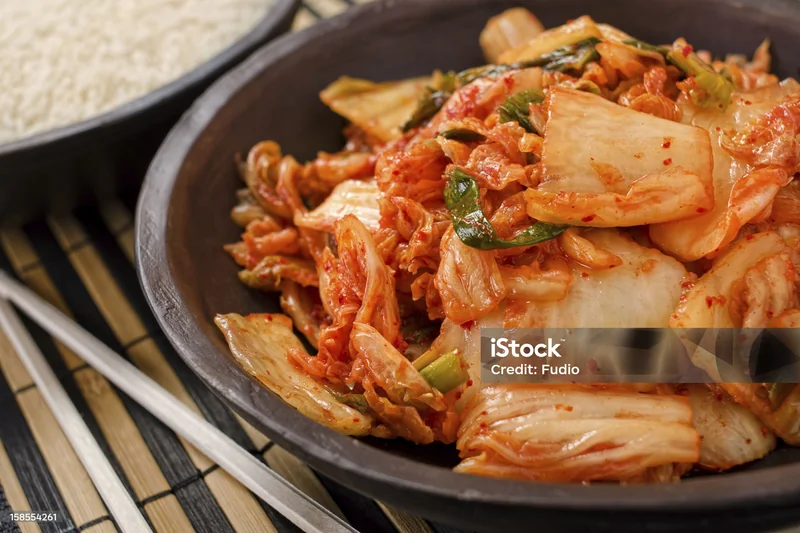
Kimchi is a beloved traditional dish in North Korea, made primarily from fermented Napa cabbage and a variety of seasonings. It's a staple side dish that accompanies almost every meal, reflecting the country's culinary heritage and communal dining culture. Often enjoyed as a snack or side, kimchi is celebrated for its bold flavors and probiotic benefits.
Cut the Napa cabbage in half lengthwise and then cut each half into thirds.
Place the cabbage pieces in a large bowl and sprinkle with sea salt. Toss to coat evenly.
Add enough cold water to cover the cabbage. Let it sit for 1-2 hours, tossing occasionally to ensure even salting.
After 1-2 hours, rinse the salted cabbage thoroughly under cold water to remove excess salt.
Drain well and squeeze out as much water as possible.
In a bowl, combine grated ginger, minced garlic, sugar, fish sauce (or soy sauce), and Korean red pepper flakes.
Mix well to form a paste.
In a large mixing bowl, combine the drained cabbage, carrot, green onions, and daikon radish (if using).
Add the kimchi paste to the vegetables and toss thoroughly to coat everything evenly.
Pack the kimchi mixture tightly into a clean jar or container, pressing down to remove air bubbles.
Leave some space at the top to allow for expansion as the kimchi ferments.
Seal the jar or container with a lid. Let it sit at room temperature for 1-2 days to start the fermentation process.
After 1-2 days, move the kimchi to the refrigerator. It will continue to ferment slowly and develop more flavor over time.
Enjoy your meal!
Kimchi is a traditional Korean dish made from fermented vegetables, primarily Napa cabbage, seasoned with spices.
Kimchi has deep roots in Korean culture, with variations found throughout the country, including North Korea.
Key ingredients include Napa cabbage, sea salt, ginger, garlic, sugar, fish sauce, Korean red pepper flakes, and carrot.
Kimchi takes approximately 120-140 minutes to prepare and ferment.
Kimchi is often served with rice, noodles, or as a side to grilled meats.