FoodieAtlas
Recipes around the World
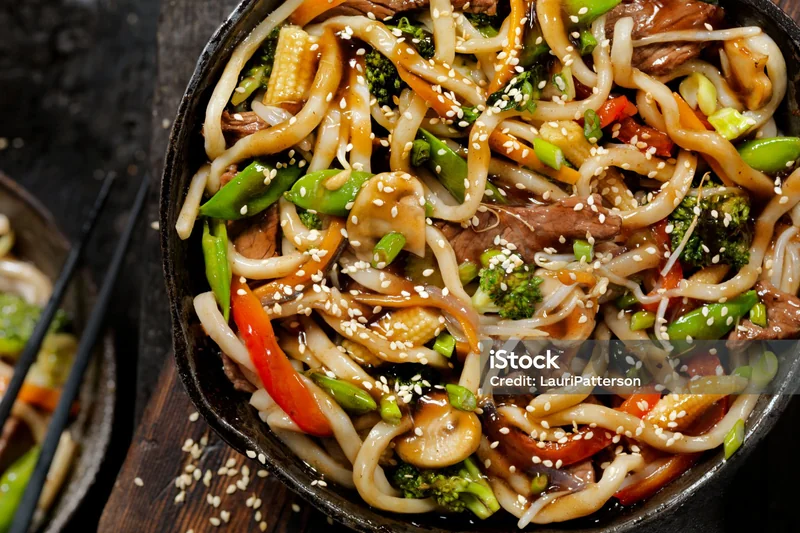
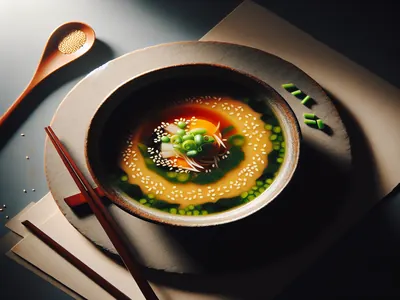
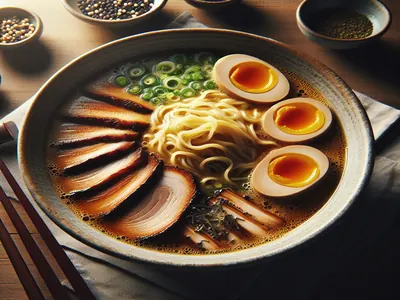
Udon noodles are thick, white, and satisfyingly chewy — the texture comes from a high-gluten flour, a specific salt-water ratio, and the kneading process where the dough is worked under foot weight until it develops the elasticity that survives minutes in boiling water without going soft. The broth in Kagawa Prefecture (Japan's self-proclaimed udon capital) uses kombu and iriko (small dried sardines) rather than bonito, giving it a rougher, more mineral flavor than Tokyo's sweeter dashi. Kake udon — hot noodles in broth with only scallion and perhaps a sheet of nori — is the purist's bowl; the soup is clear and pale in Osaka (light soy tsuyu), dark brown in Tokyo (heavier soy). Cold zaru udon, dipped in cold mentsuyu, shows the noodle's texture at its most honest.
In a large pot, combine the dashi, soy sauce, mirin, and sugar.
Bring to a simmer over medium heat and cook for about 5 minutes, stirring to dissolve the sugar.
If using frozen udon noodles, cook them according to the package instructions.
If using fresh udon noodles, simply rinse them under warm water to separate the strands.
In a separate pot, bring water to a boil and blanch the spinach or bok choy for 1-2 minutes. Remove and set aside.
In the same pot, blanch the julienned carrots for 1-2 minutes and set aside.
If using cooked chicken or beef, slice into thin strips.
Divide the cooked udon noodles among serving bowls.
Pour the hot broth over the noodles, distributing it evenly.
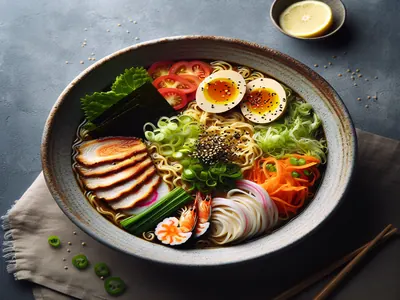
Arrange the cooked protein, mushrooms, carrots, and spinach or bok choy on top of the noodles.
Garnish with sliced green onions, nori strips, tempura flakes, and toasted sesame seeds as desired.
Serve the udon hot with additional soy sauce or chili oil on the side if desired.
Thick Japanese wheat noodle; characteristically chewy. Served hot in dashi broth (kake udon) or cold with dipping sauce (zaru udon). The texture is achieved through high-gluten flour and foot-kneaded dough.
Kagawa Prefecture claims the origin (and holds regional pride in udon). Spread throughout Japan with distinct regional variations — Kansai uses light soy broth, Kanto darker and heavier.
All-purpose or bread flour (high gluten), salt, water for noodles. Broth: kombu + bonito or iriko, light or dark soy sauce depending on region.
After boiling, rinse udon in cold water even if serving hot — this removes surface starch and gives the noodle its characteristic firm-slippery texture that separates good udon from mushy noodles.
Tempura (ten-udon), soft-boiled egg, aburaage (fried tofu), pickled ginger. Drink cold beer alongside or hot green tea for a complete meal.