FoodieAtlas
Recipes around the World
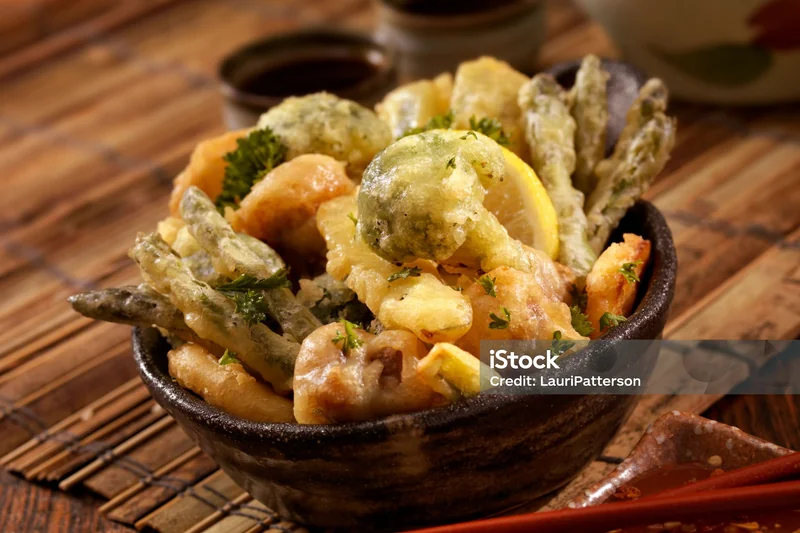
Tempura batter should not be mixed — it should be stirred three or four times with chopsticks, leaving lumps, and the ice-cold water is essential: the temperature differential between cold batter and hot oil (180°C) creates the shatteringly light, almost translucent coating that distinguishes tempura from heavy Western-style frying. The technique arrived in Japan via Portuguese missionaries in the 16th century (the word 'tempura' derives from the Latin 'quatuor anni tempora' — the Ember Days when Catholics abstained from meat), and Japanese cooks refined it over the Edo period into something distinct from its origins. Edo-period (Tokyo) street stalls fried shrimp and root vegetables on skewers as fast food; the kaiseki version wraps more precious ingredients in the same light coat and serves them on a rack with separate dipping sauce (tentsuyu) and grated daikon. The oil temperature must be constant — drop below 170°C and the batter absorbs oil and becomes heavy.
In a bowl, lightly beat the egg.
Add the ice-cold water to the egg and mix well.
Gradually add the flour to the egg mixture, stirring lightly with chopsticks or a fork. The batter should be lumpy and slightly runny. Do not overmix.
Pat the shrimp and vegetables dry with paper towels.
Heat the vegetable oil in a deep fryer or a large pot to 350°F (175°C).
Dip the shrimp and vegetables into the tempura batter, allowing any excess batter to drip off.
Carefully place the battered shrimp and vegetables into the hot oil, frying in small batches to avoid overcrowding.
Fry until golden brown and crispy, about 2-3 minutes for shrimp and 1-2 minutes for vegetables.
Use a slotted spoon to remove the tempura from the oil and drain on paper towels.
In a small saucepan, combine the dashi, soy sauce, and mirin.
Bring the mixture to a gentle simmer over low heat, then remove from heat.
Arrange the tempura on a serving plate.
Lightly battered and deep-fried seafood and vegetables; the batter must be ice-cold and under-mixed for maximum lightness. The technique depends on temperature control and restraint in mixing — over-mixing destroys the delicate crumb structure.
Portugal → Japan, 16th century via missionaries. Edo-period street food evolved into kaiseki luxury preparation, transforming a simple technique into a refined culinary art.
Shrimp, white fish, sweet potato, eggplant, shishito pepper; batter: cake flour, ice water (ratio approximately 1:1), egg yolk; tentsuyu dipping sauce made from dashi, soy sauce, and mirin.
Keep the batter cold — a bowl of ice under the mixing bowl helps; never overmix the batter (lumps are correct); fry in small batches to maintain constant oil temperature between 170-180°C.
Tentsuyu (dashi + mirin + soy) with grated daikon, steamed rice, hot green tea. Or served as tempura soba or udon (noodles in broth topped with tempura).