FoodieAtlas
Recipes around the World
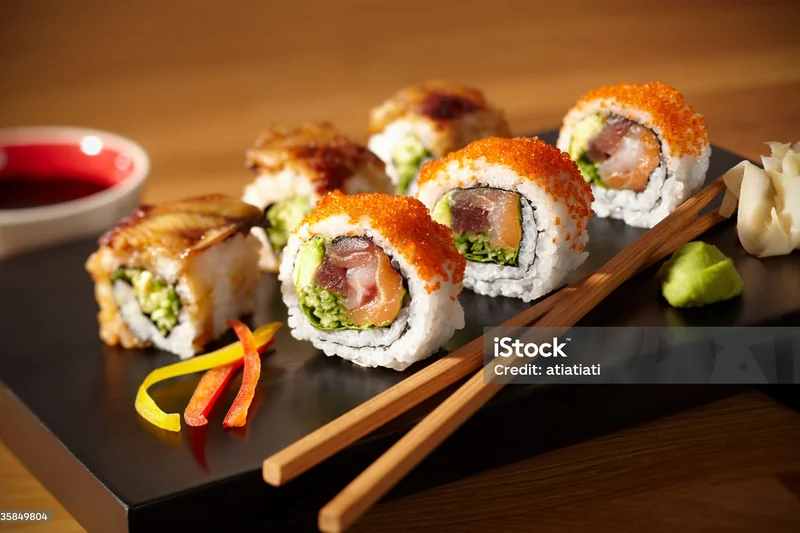
The word sushi refers to the rice, not the fish — a distinction that clarifies why tamago (egg), cucumber, and pickled vegetables can all be sushi, and why the vinegar-seasoned rice is treated as carefully as anything placed on top of it. Sushi's origins lie in narezushi, a Southeast Asian fermented fish preservation method that reached Japan in the 8th century; the fish was fermented for months in rice, which was then discarded — the opposite of what we eat today. The transformation to the modern nigiri form happened in Edo-period Tokyo in the 1820s, when street vendors began selling vinegared rice topped with fresh fish at outdoor stalls. The quality of a sushi meal is defined not by the fish alone but by the rice: temperature, vinegar balance, and hand pressure determine whether nigiri holds together and releases flavor correctly.
Rinse the sushi rice under cold water until the water runs clear.
In a rice cooker or saucepan, combine the rice and water. Cook according to the rice cooker's instructions or bring to a boil, then reduce heat to low, cover, and simmer for about 18-20 minutes until the rice is cooked and the water is absorbed.
In a small bowl, mix the rice vinegar, sugar, and salt until dissolved. Gently fold this mixture into the cooked rice, then let the rice cool to room temperature.
Place a bamboo sushi mat on a clean surface and cover it with plastic wrap.
Lay a sheet of nori, shiny side down, on the bamboo mat.
Wet your fingers with water to prevent sticking, then spread a thin, even layer of sushi rice over the nori, leaving a 1-inch border at the top edge.
Arrange the cucumber, avocado, sashimi-grade fish, and any other desired fillings in a line across the middle of the rice.
Using the bamboo mat, carefully roll the sushi away from you, pressing firmly to create a tight roll. Moisten the top edge of the nori with a little water to seal the roll.
Using a sharp knife, slice the roll into bite-sized pieces. Wipe the knife with a damp cloth between cuts to ensure clean slices.
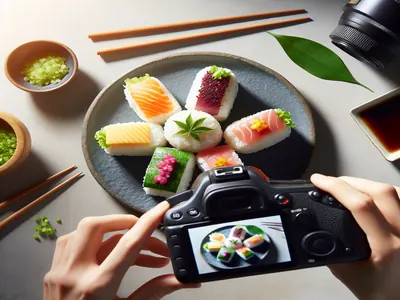
Arrange the sushi pieces on a plate and serve with soy sauce, wasabi, and pickled ginger on the side.
Sushi is a Japanese dish centered on vinegared rice (shari) paired with various toppings or fillings — most commonly raw fish, shellfish, or vegetables. The main styles include nigiri (hand-pressed rice with a topping), maki (rice and filling rolled in nori seaweed), temaki (hand-rolled cones), and chirashi (loose toppings arranged over a bowl of rice).
The word sushi is ancient, originally referring to the fermented fish and rice preservation technique (narezushi) that arrived in Japan from Southeast Asia in the 8th century. Modern sushi as we know it — fresh fish over vinegared rice without fermentation — emerged in Edo (Tokyo) in the early 19th century, when street vendors invented nigiri as fast food for the city's growing population.
Sushi rice is made from short-grain Japanese rice seasoned while warm with a mixture of rice vinegar, sugar, and salt. Toppings vary widely — traditional nigiri uses sashimi-grade tuna (maguro), salmon (sake), yellowtail (hamachi), shrimp (ebi), or sea urchin (uni), while maki rolls incorporate a broad range of vegetables and cooked ingredients.
The temperature of the rice is critical: too cold and it becomes gummy, too warm and it overwhelms delicate fish. Traditional sushi chefs keep rice at body temperature. When making nigiri, wet your hands lightly and use minimal pressure — over-compressed rice becomes dense, destroying the light texture that defines well-made sushi.
Sushi is served with soy sauce for dipping (dip the fish side, not the rice), pickled ginger (gari) to cleanse the palate between different fish, and wasabi — applied between rice and fish in traditional nigiri, not mixed into soy sauce. Miso soup is the standard accompaniment in Japanese sushi restaurants.