FoodieAtlas
Recipes around the World
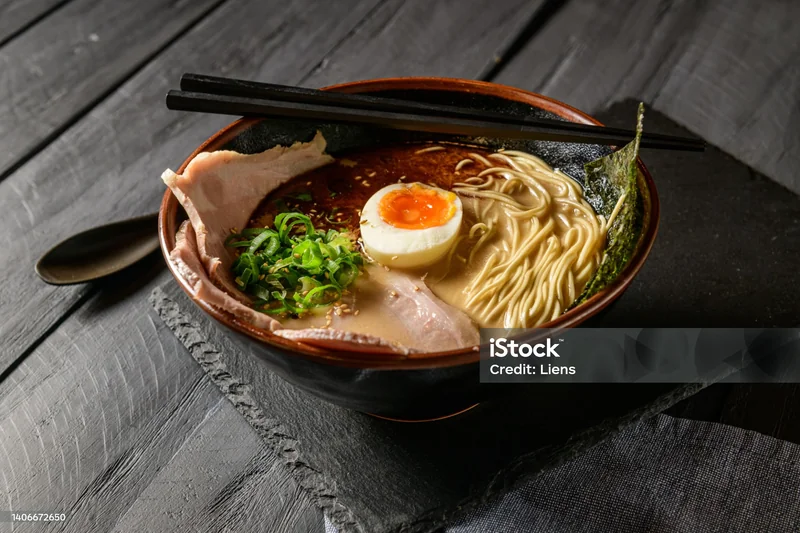
Ramen is not one dish but a universe of regional variation: Sapporo builds a thick miso base, Fukuoka simmers pork bones for 18 hours until the broth turns white and opaque, Tokyo layers clear soy tare over chicken stock — each city's interpretation is a point of local identity. Ramen arrived in Japan from China in the late 19th century and was indigenized completely, becoming one of the country's most culturally specific dishes despite its immigrant origins. The modern ramen shop is centered on the broth, built over hours then combined with a concentrated seasoning called tare, finished in minutes with fresh noodles and carefully prepared toppings. Eating ramen properly in Japan means bending close to the bowl and slurping loudly — not bad manners, but an acknowledgment that the food is hot and the cook did their job.
In a large pot, combine the chicken or vegetable broth, water, soy sauce, miso paste, sake (if using), mirin, minced garlic, and minced ginger.
Bring to a simmer over medium heat and cook for about 10-15 minutes to allow the flavors to meld.
In a separate pot, cook the ramen noodles according to the package instructions until al dente.
Drain the noodles and set aside.
Divide the cooked noodles among serving bowls.
Pour the hot broth over the noodles, distributing it evenly.
Top each bowl with halved soft-boiled eggs, sliced cooked chicken or pork, baby spinach or bok choy, corn kernels, and sliced green onions.
If using, add nori strips and sprinkle with toasted sesame seeds.
Serve the ramen hot with additional soy sauce or chili oil on the side if desired.
Ramen is a Japanese noodle soup of wheat noodles served in a carefully crafted broth, seasoned with a tare (concentrated flavoring) and topped with ingredients like chashu pork, a soft-boiled marinated egg, nori, and green onions. There are four main regional styles distinguished by their broth base: shoyu (soy sauce), miso, shio (salt), and tonkotsu (pork bone).
Ramen was brought to Japan by Chinese immigrants in the late 19th and early 20th century, and over the following decades developed into something wholly Japanese — particularly after World War II, when ramen shops proliferated and each region cultivated its own distinct style. Sapporo, Fukuoka, Tokyo, and Kyoto each have recognizably different versions still debated today.
The broth is the foundation — made from pork bones, chicken, dashi, or a combination simmered for hours. A separate tare (concentrated soy, miso, or salt seasoning) is added per bowl at service, the wheat noodles are cooked separately, and toppings like chashu pork, bamboo shoots (menma), and ajitsuke tamago (marinated soft-boiled egg) complete the bowl.
The broth must be made well in advance — it cannot be rushed, and the quality of the base determines everything. Cook the noodles in unsalted water since the broth provides seasoning, and serve immediately: ramen noodles absorb broth quickly and turn mushy if left to sit even a few minutes.
Ramen is a complete meal on its own, but in Japanese ramen-ya it is traditionally accompanied by gyoza (pan-fried dumplings) and a cold beer. Pickled ginger, extra chili oil, or a small bowl of kimchi are common additions at the table depending on the shop's style.