FoodieAtlas
Recipes around the World
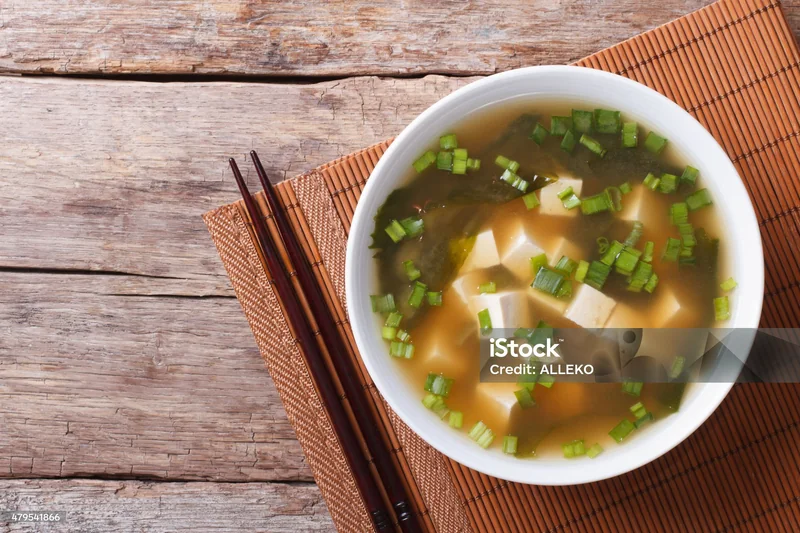
Miso soup is assembled rather than cooked in the Western sense: dashi — a broth made from kombu seaweed and katsuobushi (dried bonito flakes) steeped in hot water — is heated to just below a boil, then miso paste is dissolved into it through a strainer or ladle, never boiled, because boiling kills the beneficial bacteria and dulls the fermented depth. The soup appears at every traditional Japanese breakfast alongside steamed rice and tsukemono (pickles), forming the basic unit of a Japanese home meal. Miso itself ranges from white (shiro, mild and sweet) to red (aka, aged and sharp) with dozens of regional varieties in between, and families tend to have strong preferences about which type the morning bowl uses. The tofu, wakame, and sliced scallion floating in the bowl are the standard additions, though myoga ginger, daikon, and mushrooms appear seasonally.
In a medium saucepan, bring the dashi to a gentle simmer over medium heat. Do not let it boil.
Place the miso paste in a small bowl.
Add a ladleful of hot dashi to the miso paste and whisk until smooth.
Return the miso mixture to the saucepan and stir gently to combine.
Add the tofu cubes to the soup and simmer for 2–3 minutes until heated through.
If using, add the wakame seaweed and nori strips and simmer for another 1–2 minutes.
Ladle the miso soup into bowls and garnish with sliced green onions. Serve hot.
Japanese daily soup: dashi broth + dissolved miso paste; tofu, wakame, scallion standard garnishes.
Japan; miso developed from Chinese soybean paste; soup version established in Muromachi period (14th-16th century).
Dashi (kombu + bonito), miso paste (white, red, or mixed), silken tofu, dried wakame, scallion.
Never boil the soup after adding miso — heat kills the live cultures and makes it flat; dissolve miso off the heat.
Steamed rice, pickled vegetables (tsukemono), tamagoyaki (rolled egg); part of traditional ichiju-sansai breakfast.