FoodieAtlas
Recipes around the World
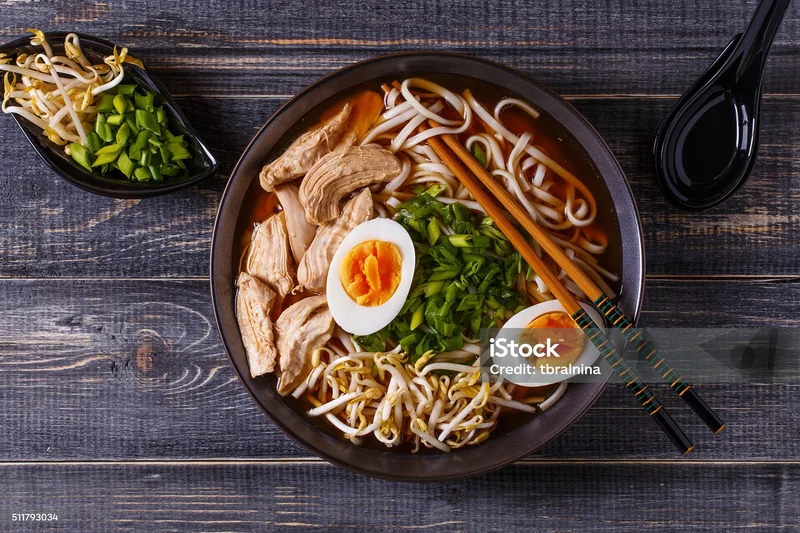
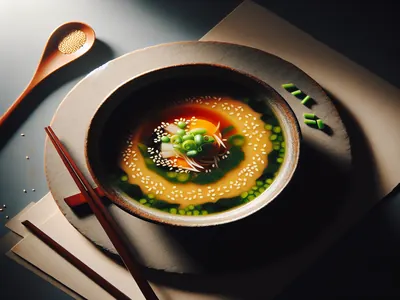
Miso ramen is Hokkaido's contribution to Japan's regional ramen map: born in Sapporo in the 1950s at a restaurant called Aji no Sanpei, the miso-based broth was developed to stand up to the cold northern winters, and it delivers — the soup is thick, rich, and warming in a way that the lighter tonkotsu and soy-based broths are not. The miso tare (seasoning paste) is stirred into a pork or chicken broth and defines the character of the bowl; the version in Sapporo often includes a knob of butter melting on top, sweet corn, and beansprouts, reflecting Hokkaido's dairy and agricultural abundance. The noodles for miso ramen are typically wavy and medium-thick — they hold the viscous broth better than thin straight noodles. Chashu pork, menma (bamboo shoots), and nori complete the bowl.
In a large pot, combine the chicken or vegetable broth, water, soy sauce, miso paste, sake (if using), mirin, minced garlic, and minced ginger.
Bring to a simmer over medium heat and cook for about 10–15 minutes to allow the flavors to meld.
In a separate pot, cook the ramen noodles according to the package instructions until al dente.
Drain the noodles and set aside.
Divide the cooked noodles among serving bowls.
Pour the hot broth over the noodles, distributing it evenly.
Top each bowl with halved soft-boiled eggs, sliced cooked chicken or pork, baby spinach or bok choy, corn kernels, and sliced green onions.
If using, add nori strips and sprinkle with toasted sesame seeds.
Serve the ramen hot with additional soy sauce or chili oil on the side if desired.
Sapporo-style ramen with miso-tare broth; thick, rich, winter-warm; topped with corn, butter, chashu.
Sapporo, Hokkaido; invented at Aji no Sanpei restaurant in the 1950s; reflects Hokkaido's cold climate and dairy culture.
Wavy ramen noodles, miso tare (red or blended miso), pork/chicken broth, butter, corn, bean sprouts, chashu pork, nori.
Make the tare separately and add to broth at service — this way you can adjust the miso intensity per bowl without over-salting the whole pot.
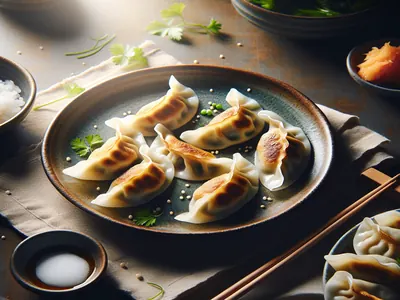
Gyoza on the side; cold Sapporo beer; part of a ramen shop visit rather than a home meal.