FoodieAtlas
Recipes around the World
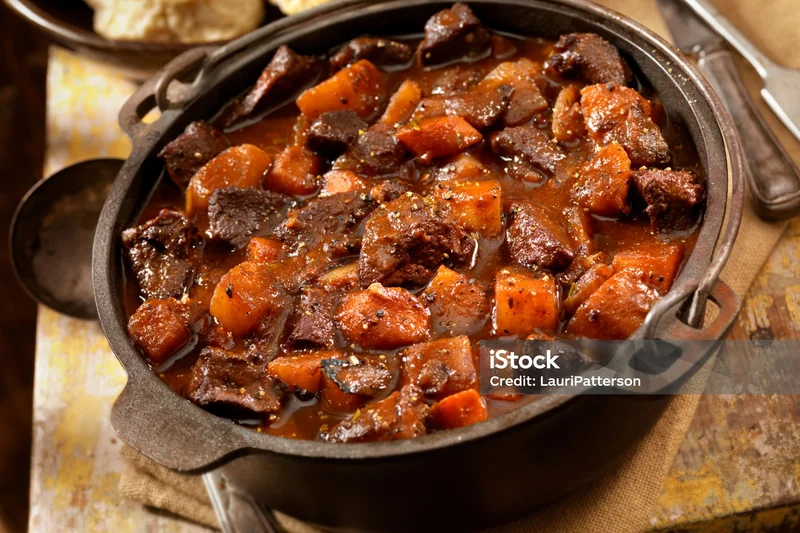
Irish stew arrives in a bowl nearly overflowing with tender mutton, potatoes melting into thick broth, nothing but onion for flavor and body. This is peasant food from centuries when Irish families owned sheep and had access to potatoes and not much else. The recipe is strict in its austerity: the meat cooks with onions, potatoes absorb the juices and thicken the liquid, no flour or cream needed. The stew improves with time, as if poverty and necessity created a technique more sophisticated than conscious cooks could devise. It's still the heart of Irish hospitality—warm, filling, real.
Heat the vegetable oil in a large pot or Dutch oven over medium-high heat. Add the meat chunks and brown on all sides. Remove the meat from the pot and set aside.
In the same pot, add the chopped onions and cook until softened, about 5 minutes. Add the minced garlic and cook for another minute.
Return the browned meat to the pot. Add the potatoes, carrots, and the beef or lamb broth. Add enough water to just cover the ingredients.
Stir in the parsley, thyme, bay leaf, salt, and black pepper.
Bring to a boil, then reduce heat to low. Cover and simmer for about 1.5 to 2 hours, or until the meat is tender and the vegetables are cooked through.
Discard the bay leaf before serving.
Traditionally, mutton (older sheep) was used because it was what people had. Modern recipes use lamb or beef, which are more tender. If using mutton, allow longer cooking time—it's tougher but develops deeper flavor than lamb.
Authentic Irish stew relies on potato starch to thicken the broth naturally as the potatoes cook and soften. This technique emerged from necessity when flour wasn't always available, but the result is superior—silky broth without a flour taste.
The oldest recipes use just meat, potato, and onion. Carrots and garlic are modern additions that improve flavor without straying from tradition. Both are fine—use them or leave them based on preference.
Yes, and you should. Irish stew tastes significantly better the next day after flavors meld. Store in the refrigerator for up to three days. Reheat gently on the stovetop. It also freezes well for up to three months.
Soda bread or brown bread is traditional, perfect for soaking up the broth. Crusty white bread works equally well. The stew itself needs little accompaniment beyond bread and possibly a simple salad.