FoodieAtlas
Recipes around the World
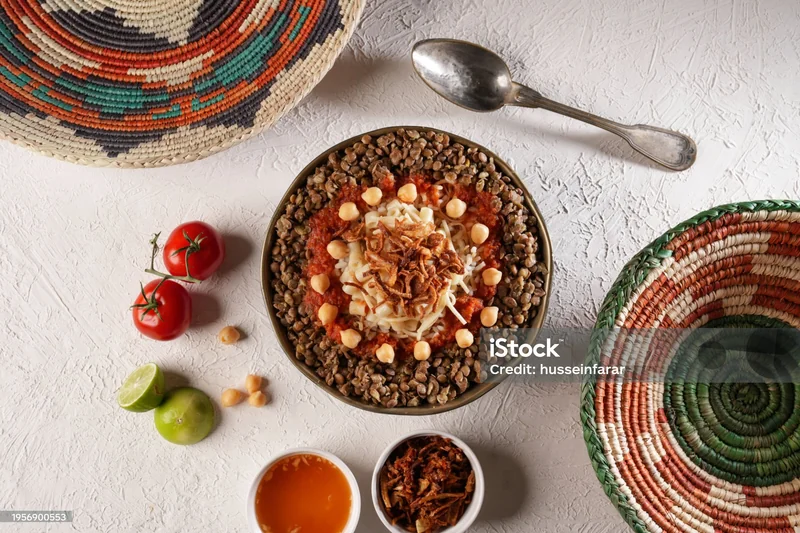
Koshari towers in paper cones at street stalls—white rice, brown lentils, elbow pasta layered high, then drenched with hot spiced tomato sauce and topped with crunchy fried onions. This Egyptian national dish emerged in the 19th century from British and Indian influences merged with Egyptian ingredients, creating something distinctly Egyptian. The appeal is textural—crispyfried onions against soft rice, the earthiness of lentils, the chewy pasta, the acidity and spice of sauce. A complete meal in a cone, koshari feeds millions daily as breakfast, lunch, and dinner, beloved equally by wealthy Cairenes and casual laborers.
Rinse the lentils under cold water. Place them in a pot with enough water to cover them by about 2 inches.
Bring to a boil, then reduce heat and simmer for about 20-25 minutes until tender. Drain and set aside.
Cook the rice according to package instructions. Set aside.
Cook the small pasta according to package instructions. Drain and set aside.
Heat 2 tablespoons of vegetable oil in a large skillet over medium heat.
Add the chopped onion and minced garlic, cooking until the onions are golden brown.
Add the cooked lentils, rice, and pasta to the skillet. Stir in the ground cumin, coriander, paprika, black pepper, and salt.
Cook for an additional 5 minutes, stirring occasionally. Set aside.
Heat 1 tablespoon of vegetable oil in a saucepan over medium heat.
Add the minced garlic and cook for 1 minute until fragrant.
Add the crushed tomatoes, ground cumin, coriander, paprika, salt, and black pepper.
Simmer for about 10-15 minutes until the sauce thickens slightly. Set aside.
Heat vegetable oil in a frying pan over medium heat.
Dredge the thinly sliced onions in flour and shake off excess.
Fry the onions in batches until golden brown and crispy. Remove with a slotted spoon and drain on paper towels.
Serve the lentil and rice mixture in bowls. Top with a generous amount of tomato sauce. Garnish with crispy onions.
Layering preserves distinct textures and flavors. Mixing creates a homogeneous dish; layering allows each component to stand out while creating contrast with each bite.
Essential. They provide textural contrast and their sweetness balances the spiced tomato sauce. Without them, koshari becomes one-dimensional.
Yes. Elbow macaroni is traditional, but any small pasta works. Avoid large shapes—they disrupt the proper texture-to-element ratio.
Brown lentils are more common. Black (beluga) lentils are finer and considered more luxurious. Either works, though the flavor and texture differ slightly.
Paper cones are practical street food packaging, allowing people to eat standing up while walking. It's how koshari is traditionally sold in Cairo and has become iconic to the dish's identity.