FoodieAtlas
Recipes around the World
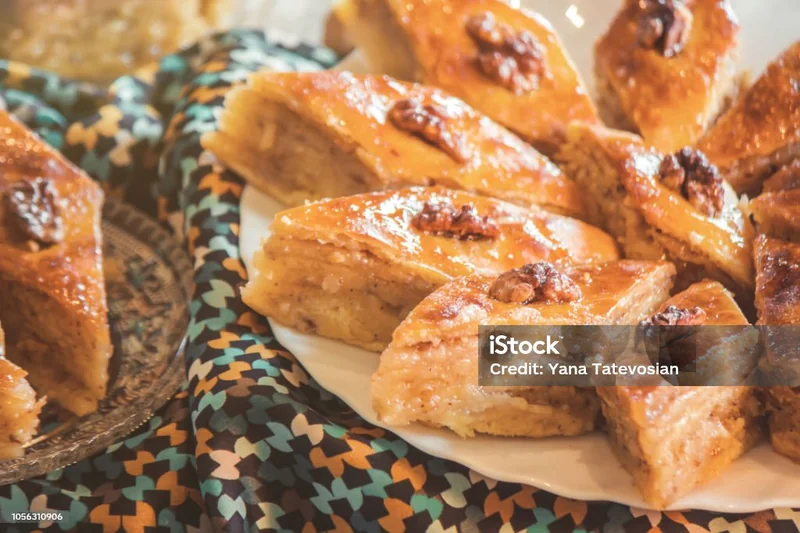
Baklava in Egypt differs from Turkish versions—thinner, crispier phyllo, generous pistachio filling, and orange blossom honey creating floral notes. These diamond-cut pastries emerge from the oven shatteringly crisp, then immediately drizzled with warm honey syrup that softens the exterior while maintaining crispy layers inside. Egyptian baklava appears at bakeries and pastry shops, particularly luxurious versions at upscale confectioners. The orange blossom honey infuses the dessert with delicate aroma that distinguishes Egyptian baklava from heavier, more heavily spiced versions found elsewhere.
Preheat your oven to 350°F (175°C).
In a bowl, mix the finely chopped walnuts with ground cinnamon. Set aside.
Brush a 9x13-inch baking dish with melted butter.
Layer 8 sheets of phyllo dough in the dish, brushing each sheet with melted butter before adding the next.
Sprinkle a thin layer of the walnut mixture over the phyllo.
Continue layering 6 sheets of phyllo dough, brushing each with butter, followed by a layer of walnut mixture.
Repeat the process until you have used up all the walnut mixture and phyllo dough, finishing with 8 layers of phyllo on top.
Using a sharp knife, cut the baklava into diamond or square shapes.
Bake in the preheated oven for 45-50 minutes, or until golden brown and crisp.
While the baklava is baking, combine granulated sugar, water, and honey in a saucepan.
Bring to a boil, then reduce heat and simmer for about 10 minutes.
Remove from heat and stir in the vanilla extract.
Once the baklava is done baking, remove it from the oven.
Immediately pour the hot syrup evenly over the hot baklava.
Allow the baklava to cool completely before serving to let the syrup soak in and the layers set.
Hot phyllo absorbs the syrup rapidly, creating proper moisture distribution. Syrup poured on cold baklava sits on the surface rather than penetrating the layers.
Egyptian versions use thinner phyllo, generous pistachios (not walnuts), and orange blossom honey syrup. Turkish versions are thicker and more heavily spiced.
Yes, though pistachios are traditionally more prestigious in Egypt. Walnuts are acceptable and more affordable, creating different but still delicious baklava.
Cut while still warm with a sharp, thin knife using gentle sawing motions. Cutting when cold causes cracking; when too hot, the filling squeezes out.
Orange blossom water adds floral delicacy that distinguishes Egyptian baklava. It's more subtle than vanilla, creating elegance rather than heavy sweetness.