FoodieAtlas
Recipes around the World
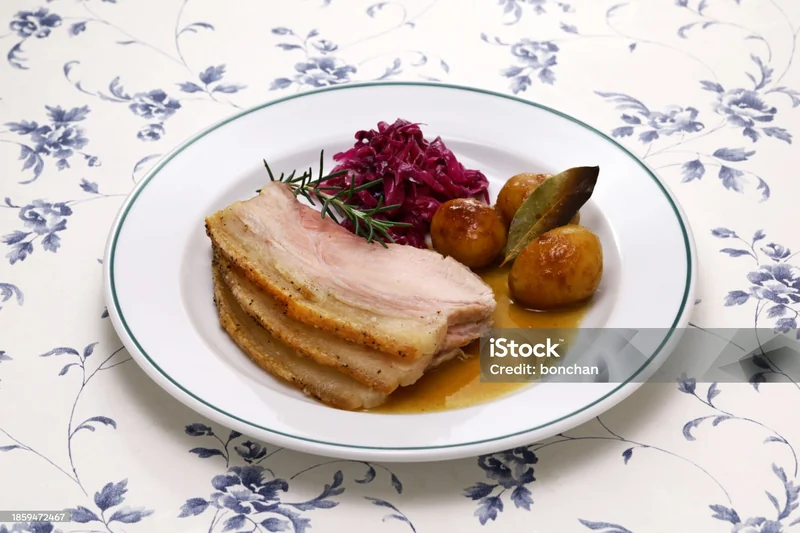
The kitchen fills with the savory aroma of pork roasting as carefully scored rind blisters and crisps under intense heat, puffing into crackling-textured armor protecting juicy, tender meat below. Flæskesteg defines Danish Christmas, appearing on tables the same way turkey dominates American Thanksgiving or prime rib marks British celebrations. The technique—precise crosshatch scoring combined with patient roasting—requires no exotic ingredients or complicated methods, yet transforms a simple pork shoulder into something festive and impressive. Sliced thick and served with dark caramelized potatoes and braised red cabbage, flæskesteg represents Danish cuisine's philosophy: let quality pork and time do the talking.
Preheat the oven to 175 °C (350 °F).
With a very sharp knife, score the skin in thin parallel lines about 1 cm (1/2 inch) apart, cutting through the skin and fat but not into the meat.
Rub the meat and skin with oil. Season with salt, pepper and allspice, and rub plenty of coarse salt deep into the cuts in the skin.
Place the roast on a rack in a roasting pan. Add the water, onion, carrots, bay leaves and thyme to the pan.
Roast for 1 1/2–2 hours, until the centre of the meat reaches 63–65 °C (145–150 °F). Add a little water to the pan if it dries out.
If the crackling is not yet crisp, turn the oven up to 220 °C (425 °F) and roast for another 15–20 minutes, watching closely, until it bubbles and crackles.
Lift the roast onto a board and rest for 15 minutes.
Strain the pan juices into a jug and skim off most of the fat. Top up with stock to make about 3 cups (720 ml).
Melt the butter in a saucepan, stir in the flour and cook for 1–2 minutes. Gradually whisk in the juices. Simmer for 5 minutes, then stir in the cream and redcurrant jelly. Season to taste.
Slice the roast with the crackling and serve with the gravy.
Use a very sharp knife and apply only moderate pressure—you want to cut through the rind and fat layer without piercing the meat itself. Work in a crosshatch pattern about 1/4 inch apart. The scored lines allow fat to render, helping the skin puff and crisp. Practice on a cold roast first if nervous.
Start at 350°F (175°C) for 1.5-2 hours, allowing the meat to cook through and become tender. The skin won't be as crispy at this temperature, so increase heat to 425°F (220°C) for the final 15-20 minutes to crisp it. Watch closely during the high-heat phase to avoid burning. Timing depends on roast size—aim for internal temperature of 145°F (63°C).
Resting allows juices to redistribute throughout the meat. Without resting, cutting immediately releases all those juices onto the cutting board instead of keeping them in each slice. Rest for 10-15 minutes under loosely tented foil—long enough to relax the meat without allowing it to cool excessively.
Yes, skin-on pork shoulder is actually traditional and affordable. Any pork cut with intact rind works—the cut matters less than having quality skin that will crisp properly. Ask your butcher to score it for you if uncomfortable doing it yourself.
Serve sliced thick (nearly 1/2 inch), accompanied by caramelized or roasted potatoes, braised red cabbage, and rich brown gravy made from pan drippings. Some families add pickled cucumber and crispy fried onions. Beer or aquavit traditionally accompany the meal. It's Christmas food, meant to be generous and celebratory.