FoodieAtlas
Recipes around the World
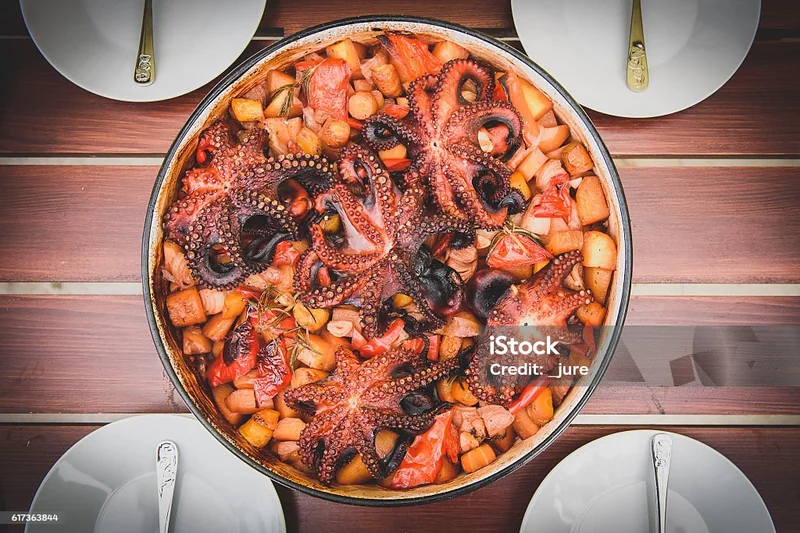
Hot embers glow around a cast-iron dome as peka—Croatian bell cooking—transforms meat and vegetables into a succulent feast beneath. This ancient outdoor cooking technique originated on the coast, where shepherds and fishermen needed portable ways to prepare meals. The bell-shaped metal dome (sač), inverted over food and buried under hot coals, creates a miniature oven that cooks through trapped steam and radiant heat. Inside, potatoes and vegetables soften while meat stays moist and develops deep flavor. Peka remains iconic in Croatian coastal areas and continues to define rustic Mediterranean cooking that depends on patience and heat rather than modern technology.
Preheat your oven to 375°F (190°C).
If using a traditional Peka (a metal dome with legs used for outdoor cooking), you can skip the oven preheating step.
In a large mixing bowl, combine the meat chunks, potatoes, carrots, onions, garlic, bell peppers, and mushrooms.
Drizzle with olive oil and toss to coat.
Season with paprika, rosemary, thyme, salt, and pepper. Mix well.
Transfer the mixture to a heavy-duty baking dish or Dutch oven.
Pour the white wine or beef broth over the mixture.
Place bay leaves on top.
Cover with a lid or tightly with aluminum foil.
Place the baking dish or Dutch oven in the preheated oven.
Cook for about 2 to 2.5 hours, or until the meat and vegetables are tender. Stir occasionally if needed.
If using a traditional Peka, place the Peka over hot coals or in an oven with the lid on. Cook for the same amount of time, checking occasionally.
Once cooked, remove the Peka from the oven or coals.
Let it rest for a few minutes before serving.
A peka (or sač) is a cast-iron or steel dome about 18-24 inches in diameter with a flat bottom and handle/legs. Traditional versions come from Croatia, though they're available online through specialty cookware retailers. Without one, a Dutch oven or heavy baking dish with a tight-fitting lid replicates the results acceptably, though you lose the outdoor cooking romance and some heat retention benefits.
Absolutely. A covered Dutch oven or heavy baking dish in a 375°F oven produces nearly identical results to outdoor peka. Cooking time remains the same—usually 2-2.5 hours. Home cooks without outdoor grills use this method regularly. The advantage of outdoor peka is theater and the subtle smoke flavor from coals, not dramatically different results.
The dome stays sealed except at the very end. You estimate cooking time (typically 2-2.5 hours) or check once if you're uncertain. Lifting the dome mid-cooking releases steam and increases total time. Experience helps—Croatians who grew up making peka develop intuition for doneness by appearance when they do lift it.
Completely. Beef, pork, lamb, chicken, and game all work in peka. Cooking times may vary slightly (chicken less, tougher game slightly more). The vegetable base stays consistent. Some versions include seafood, making coastal variations quite different from inland versions.
White wine is traditional for peka, allowing meat and vegetables to shine. Local Croatian wines pair beautifully, though any dry white works. Red wine creates different but acceptable flavors. Beef broth without wine is also traditional and widely used—don't feel obligated to use wine at all.