FoodieAtlas
Recipes around the World
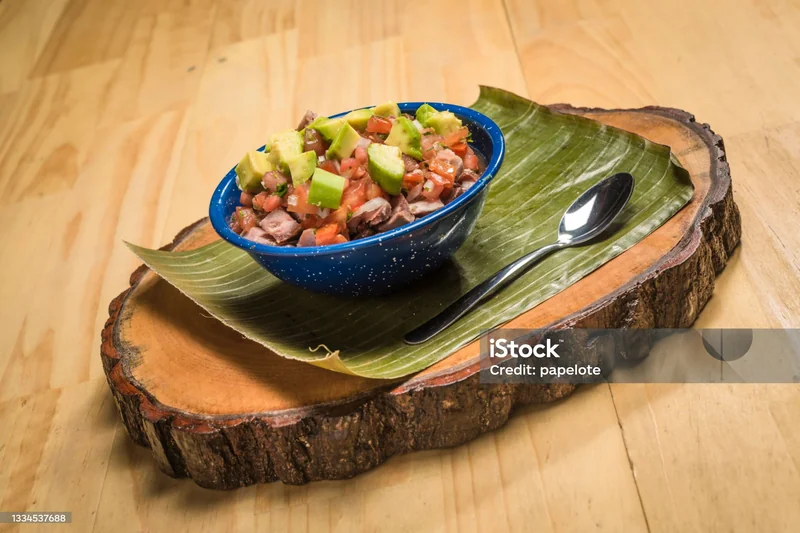
Chifrijo arrives at the table as a study in contrasts—crispy, salty pork cracklings sit atop soft, buttery avocado and warm rice and beans, a balance between richness and acidity struck by fresh lime and cilantro. This Costa Rican bar snack became famous in the 1980s, born from the creativity of a cook at a San José cantina who layered leftovers into something entirely new. Chifrijo represents modern Tico ingenuity, taking ordinary ingredients and creating something memorable through clever assembly and attention to texture. Order it in a small glass with tortilla chips on the side, and you understand immediately why it became a national standard.
If using dried beans, soak them overnight, then drain and rinse. Cook them in a pot with enough water to cover them, simmering until tender, about 1-1.5 hours. Drain and set aside.
In a large pan, heat the vegetable oil over medium heat. Sauté the onion, garlic, green bell pepper, and tomato until soft.
Add the cumin, paprika, oregano, and cooked beans. Pour in the chicken or vegetable broth. Simmer for about 15 minutes, letting the flavors meld together. Season with salt and pepper to taste.
Rinse the rice under cold water until the water runs clear. In a medium pot, bring the 2 cups of water to a boil.
Add the rice and salt, reduce heat to low, cover, and simmer for 15-20 minutes, or until the rice is cooked and water is absorbed. Fluff with a fork and keep warm.
In a bowl, toss the pork cubes with paprika, garlic powder, cumin, salt, and pepper.
Heat the vegetable oil in a large skillet over medium-high heat. Add the pork cubes and cook until browned and crispy on all sides, about 8-10 minutes. Remove from heat.
In bowls, layer the rice and beans. Top with the crispy pork.
Garnish with avocado slices, fresh cilantro, and lime wedges.
Pork belly gives the most authentic result with maximum crispiness and renders fat that crisps beautifully. Pork shoulder works too, though it won't render as much fat. Both should be cut into small cubes (about 1/2 inch) so they crisp outside while staying tender inside. Avoid lean cuts.
Medium-high heat is essential—the pork must render fat and crisp edges in 8-10 minutes. Don't overcrowd the pan. Pat the pork dry before cooking and season generously. The rendered fat pools in the pan and seasons every grain of rice below.
Black beans (as in Gallo Pinto) work well, though they create a different color and flavor profile. Some modern Ticos actually use black beans. The technique and assembly stay identical—it's the layering and texture contrast that defines Chifrijo.
Warm. The pork should be hot and crispy, the rice warm, the beans warm, and only the avocado cool. This temperature contrast is part of the appeal. Serve immediately after assembly—delaying makes everything lukewarm and less appealing.
A small glass is traditional for bar service, making it a true snack served with drinks. It's compact, easy to handle standing up, and portions stay small. At home, a bowl works fine, though the presentation in a glass is quintessentially Costa Rican.