FoodieAtlas
Recipes around the World
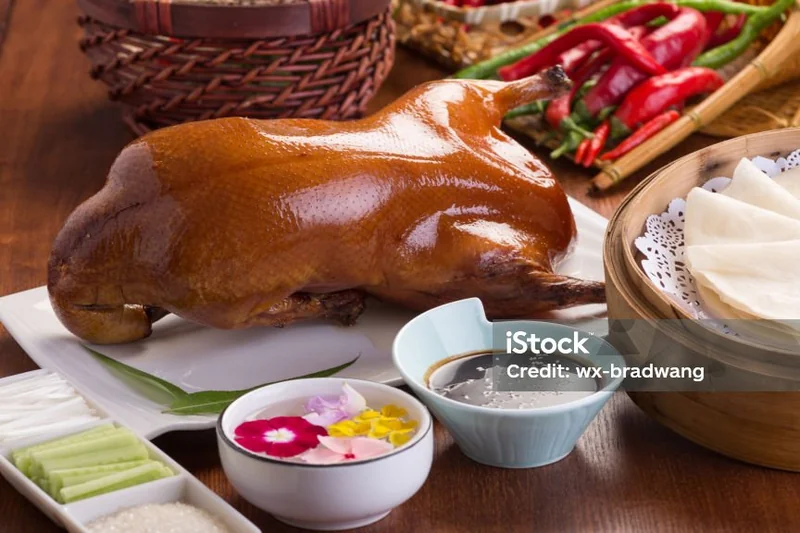
Peking duck is served in two acts at proper Beijing restaurants: first the skin, cut tableside from the duck and eaten immediately while still blistered and shatteringly crispy, dipped in sugar or wrapped alone in a thin mǎndāo pancake with hoisin and scallion. The meat course follows — duck flesh carved and served in the same pancake format. The skin's quality depends on the preparation before the oven: the duck is inflated between skin and fat (separating them), hung to air-dry for 24 hours or more (sometimes with a fan), then coated with maltose syrup and hung in a closed oven heated to around 270°C where the sugar caramelizes and the fat renders through the skin without the meat drying out. The duck used is a specific White Beijing breed (北京鸭), force-fed on grain for the last 45 days of its life to produce the specific fat deposit under the skin.
Rinse the duck inside and out, and pat dry with paper towels.
Remove any excess fat from the duck and prick the skin all over with a fork (be careful not to pierce the meat).
In a small bowl, mix soy sauce, honey, rice wine, five-spice powder, salt, and sugar to create the marinade.
Rub the marinade all over the duck, inside and out. Place the ginger, green onions, and orange quarters inside the cavity of the duck.
Let the duck marinate in the refrigerator for at least 4 hours or overnight for best results.
After marinating, hang the duck in a cool, dry place (or place it on a rack in the refrigerator) for about 4-6 hours to allow the skin to dry. This step is essential for achieving crispy skin.
Preheat your oven to 375째F (190째C).
Place the duck on a rack in a roasting pan, breast side up. Roast for about 1 hour.
After 1 hour, flip the duck over and roast for another 30 minutes.
In a small bowl, mix the honey and hot water to create the glaze.
After the second roasting period, flip the duck breast side up again and brush the honey glaze all over the duck.
Increase the oven temperature to 425째F (220째C) and roast for an additional 10-15 minutes until the skin is crispy and golden brown.
Let the duck rest for 10 minutes before carving.
Carve the duck into thin slices, serving with mandarin pancakes or thin flour tortillas, hoisin sauce, sliced green onions, and sliced cucumber.
Beijing lacquered roast duck; skin is the prize, carved tableside; two-course service: skin first, then meat in pancakes.
Beijing; imperial court dish documented since the Yuan dynasty (13th century); formalized in the Ming dynasty at the Hung-lu Restaurant (now Quanjude, est. 1864).
White Beijing duck breed, maltose syrup, soy, rice wine; served with thin pancakes, hoisin sauce, julienned scallion, cucumber strips.
Air-drying is the most critical step — the duck must be dry before the oven or the skin steams instead of crisps; restaurant ovens are hung-style; home ovens should use a rack so air circulates underneath.
Thin mandarin pancakes (mandatory), hoisin sauce, scallion, cucumber; duck bone soup as a third course; Yanjing or Tsingtao beer.