FoodieAtlas
Recipes around the World
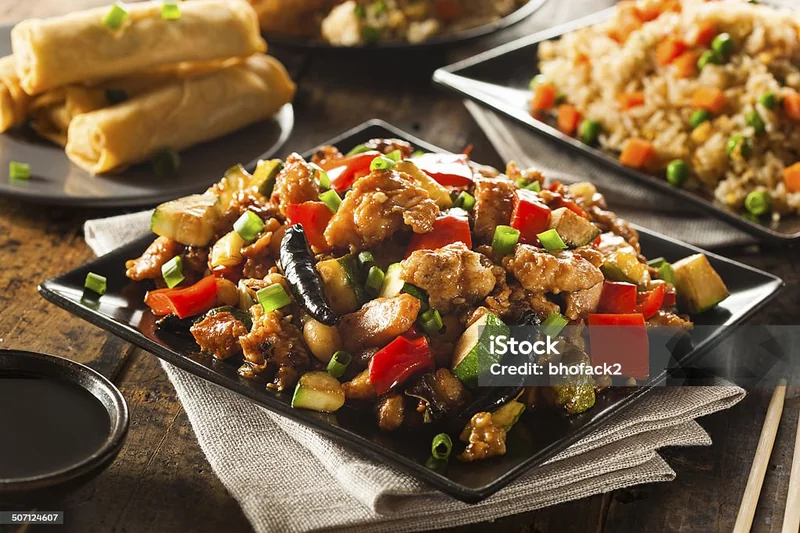
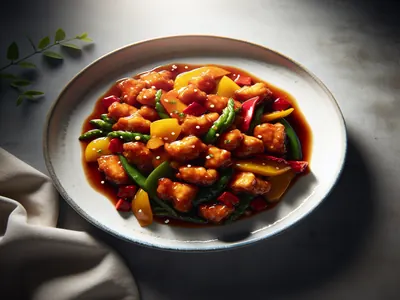
Kung Pao chicken is named for Ding Baozhen, a Qing dynasty official whose title — Gōngbǎo, or 'Palace Guardian' — gave the dish its name when he reportedly popularized it in the 1870s. The key flavor is Sichuan's dual-sensation: the dried red chilies bring heat, and the Sichuan peppercorns bring mála numbness — a tingling that doesn't exactly hurt but makes the mouth peculiarly alive. The chicken is velveted (marinated in soy, Shaoxing wine, cornstarch) to keep it tender through the fast stir-fry; the peanuts go in at the last moment and should still have some crunch when served. The sauce balance is sweet-sour-salty-spicy in equal measure — a combination that became a blueprint for Westernized 'sweet and spicy' Chinese-American cooking, which is why the authentic version may taste surprisingly different from what most people expect.
In a bowl, mix diced chicken with soy sauce, rice vinegar, hoisin sauce, and cornstarch. Let it marinate for at least 20 minutes.
In a small bowl, combine soy sauce, oyster sauce, rice vinegar, sugar, cornstarch, and water. Mix well and set aside.
Heat 1 tablespoon of vegetable oil in a large skillet or wok over medium-high heat.
Add the marinated chicken and stir-fry until it is cooked through and slightly browned. Remove the chicken from the skillet and set aside.
In the same skillet, add the remaining tablespoon of vegetable oil.
Add the minced garlic, ginger, and dried red chilies, and stir-fry for about 30 seconds until fragrant.
Add the red and green bell peppers and stir-fry for about 3-4 minutes until they start to soften.
Return the cooked chicken to the skillet.
Pour the prepared sauce over the chicken and vegetables, and toss everything together until well combined and heated through.
Add the roasted peanuts and chopped green onions, and drizzle with sesame oil. Stir to combine.
Serve the Kung Pao Chicken hot, with steamed rice or noodles.
Sichuan stir-fry: velveted chicken + dried chilies + Sichuan peppercorns + peanuts; named for a Qing dynasty official's title.
Sichuan province; credited to Governor Ding Baozhen (1820-1886); adapted globally through Chinese-American restaurant cuisine.
Chicken thigh (diced and velveted), dried red chilies, Sichuan peppercorns, roasted peanuts, Shaoxing wine, soy sauce, dark vinegar, cornstarch, garlic, ginger.
Velvet the chicken (marinate with soy + cornstarch + egg white) for at least 15 minutes before frying — this is what keeps it tender; add peanuts in the last 30 seconds only.
Steamed white rice, cucumber salad with vinegar; Tsingtao beer or Shaoxing wine alongside.