FoodieAtlas
Recipes around the World
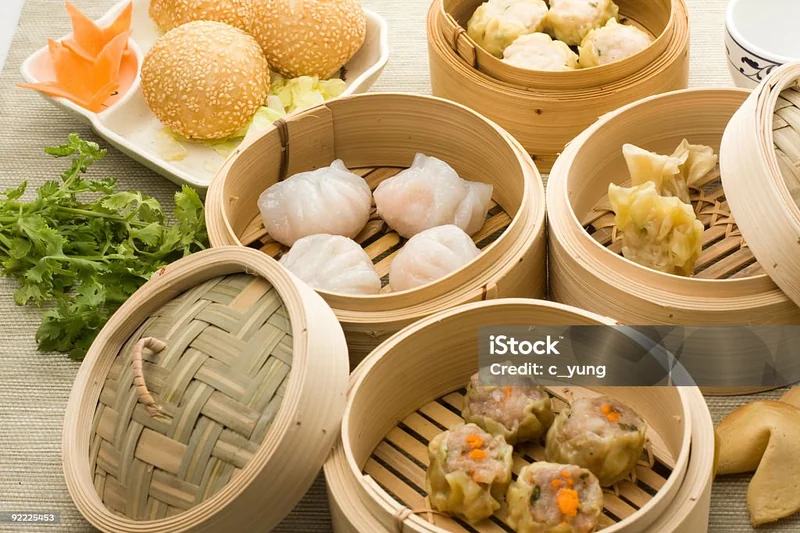
Dim sum is a format, not a single dish: dozens of small Cantonese preparations — har gow (shrimp dumplings), siu mai (pork-shrimp baskets), char siu bao (barbecue pork buns), cheung fun (rice noodle rolls), egg tarts — served in bamboo steamers and eaten communally with tea as part of yum cha ('drink tea') morning service. The tradition developed along the ancient Silk Road, where teahouses (cha lau) offered small snacks alongside tea for traveling merchants; Cantonese culture refined this into an elaborate restaurant ritual that peaks on Sunday mornings in Hong Kong, where families occupy large round tables for two to three hours. The etiquette has specific rules: pour tea for others before yourself; tap two fingers on the table when someone pours for you (a gesture substituting for a bow, originating in Qing dynasty custom). Dim sum restaurants in Hong Kong still operate on a trolley service where dishes roll past the table and diners point at what they want.
In a bowl, combine flour and cornstarch. Gradually add water and knead until you get a smooth dough.
Let the dough rest for 30 minutes.
Roll the dough out thinly and cut into small circles. Sprinkle a little cornstarch on each circle.
In a bowl, mix chopped shrimp, ground pork, garlic, soy sauce, oyster sauce, salt, sugar, and sesame oil.
Optionally, add finely chopped green onions and mix well.
Place a teaspoon of filling in the center of each dough circle.
Gather the edges of the dough to the top, pleating and pressing to seal.
Line the bottom of a steamer basket with parchment paper or lightly oil it.
Place the dim sum in the steamer basket, cover, and steam over boiling water for about 10-12 minutes.
Serve the dim sum hot, accompanied by soy sauce or other dipping sauces.
Cantonese small-plate format: steamed and fried dishes served in bamboo baskets with tea; yum cha morning tradition.
Guangdong (Canton), China; developed from Silk Road teahouse tradition; perfected in Hong Kong's restaurant culture.
Varies by dish; har gow (shrimp + tapioca wrapper), siu mai (pork + shrimp + wonton skin), char siu bao (yeasted bun + BBQ pork), egg tart (shortcrust + egg custard).
Har gow wrapper should be translucent and slightly sticky — if it tears when folded or is gummy, the wrapper ratio is off; eat immediately from the bamboo steamer, not after it cools.
Chinese tea (pu-erh, chrysanthemum, or jasmine — all classic yum cha pairings); dim sum is the meal itself, not a starter.