
FoodieAtlas
Recipes around the World
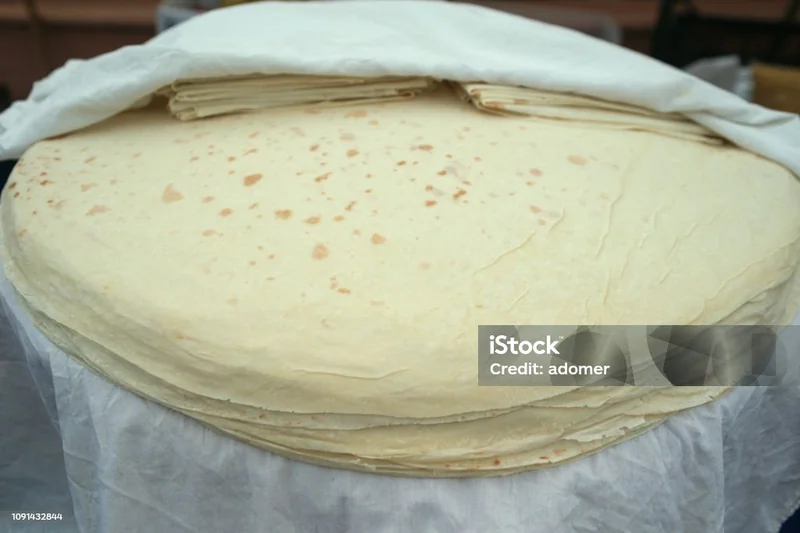
Kisra is a staple bread in Sudan, made primarily from sorghum flour. This fermented flatbread holds cultural significance, often served during meals and special occasions. It is enjoyed with various stews and dishes, making it a central part of Sudanese cuisine.
In a large mixing bowl, combine the sorghum flour and water. Stir until the mixture forms a smooth, thin batter. The consistency should be similar to crepe batter.
Cover the bowl with a clean cloth and let it sit at room temperature for 24-48 hours to ferment. Stir the batter occasionally. It should develop a slightly sour smell and some bubbles on the surface.
Once the batter is fermented, stir in the salt.
Heat a non-stick skillet or a flat griddle over medium heat. Lightly grease the skillet with vegetable oil.
Pour a ladleful of the batter onto the hot skillet, tilting the pan to spread the batter into a thin, even layer, similar to making a crepe.
Cook for about 1-2 minutes, or until the edges start to lift and the bottom is lightly browned.
Flip the kisra and cook for another 1-2 minutes on the other side.
Remove from the skillet and place on a plate. Cover with a clean cloth to keep warm.
Repeat with the remaining batter, adding more oil to the skillet as needed.
Kisra is traditionally served as an accompaniment to stews, soups, or other dishes. It can also be enjoyed on its own.
Enjoy your meal!
Kisra is a fermented flatbread made from sorghum flour, commonly consumed in Sudan. It's known for its unique texture and flavor.
Kisra originates from Sudan, where it has been a fundamental part of the diet for centuries.
The key ingredients in Kisra are sorghum flour, water, and salt.
Kisra takes between 1460 to 2910 minutes to prepare, including fermentation.
Kisra is typically served with stews, grilled meats, or vegetable dishes, making it a versatile accompaniment.