FoodieAtlas
Recipes around the World
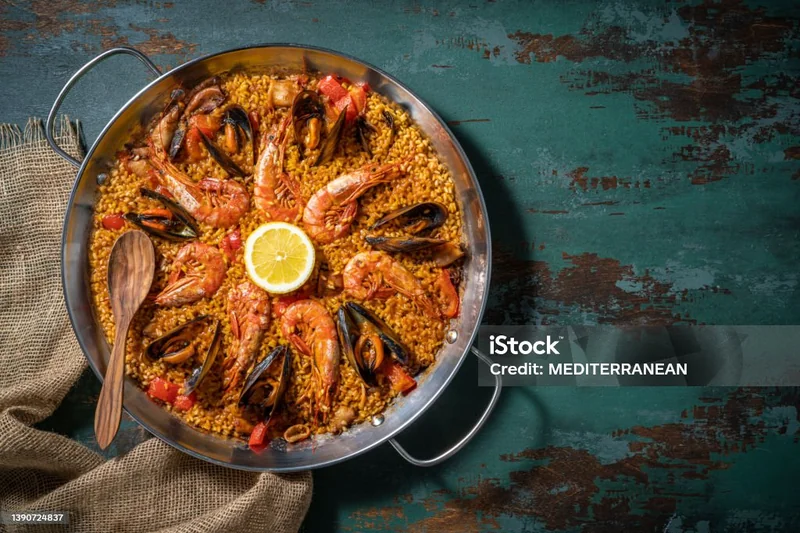
In Valencia, paella was born as a farmhand's meal — rabbit, snails, green beans, and rice cooked in a wide iron pan over an open wood fire. The seafood version came later when the dish reached coastal towns, and the mixed meat-and-seafood paella that most restaurants serve is, to a Valencian purist, not paella at all. The non-negotiable is the socarrat: the thin, lightly scorched crust of rice that forms at the bottom of the pan in the final minutes — the mark of heat control and timing that separates a paella cooked well from one cooked adequately. Saffron is not decoration; it colors and flavors the broth that the rice drinks in as it cooks. Once the broth is added, you do not stir — ever.
Heat the olive oil in a large paella pan or a wide, shallow skillet over medium heat.
Add the finely chopped onion and cook until it becomes soft and translucent.
Stir in the minced garlic, chopped red and green bell peppers, and diced tomatoes. Cook until the vegetables are softened.
Add the smoked paprika, saffron threads, salt, and black pepper. Stir to combine.
Add the chicken thighs and chorizo sausage to the pan. Cook until the chicken is browned on all sides and the chorizo releases its fat.
Push the meat and vegetables to the sides of the pan, creating a well in the center.
Pour the rice into the well and stir to coat it with the oil and spices.
Cook the rice for about 2 minutes, allowing it to lightly toast.
Pour in the chicken or seafood broth and the dry white wine.
Stir everything together, ensuring the rice is evenly distributed in the pan.
Bring the mixture to a boil, then reduce the heat to medium-low.
Arrange the shrimp, mussels, and clams on top of the rice.
Add the peas if using.
Simmer the paella without stirring for about 20-25 minutes, or until the rice is cooked and the liquid is absorbed. If the liquid evaporates too quickly, add a bit more broth as needed.
Once the rice is cooked and the seafood is done, remove the pan from heat.
Cover the pan with a clean kitchen towel and let it rest for about 5 minutes.
Garnish the paella with chopped fresh parsley and lemon wedges.
Paella is a Valencian rice dish cooked in a wide, shallow pan over direct heat. The goal is an even layer of rice that absorbs all the broth and develops a prized scorched crust — socarrat — at the base without burning.
Paella originated in the farmlands outside Valencia in the 19th century, cooked over open fires with whatever was available: rabbit, snails, and seasonal vegetables. The coastal seafood version developed later as the dish spread across Spain.
Authentic Valencian paella uses short-grain Bomba rice (which absorbs three times its volume in broth without going mushy), saffron, chicken broth, rabbit, snails, green beans, and garrofó beans. Seafood paella substitutes prawns, mussels, and squid.
Never stir the paella once the broth goes in — stirring releases starch and turns it sticky. Spread the rice in an even layer, adjust heat to maintain a steady simmer, and resist the urge to touch it. The socarrat forms in the last 2-3 minutes over slightly higher heat.
Paella is a one-pan meal and doesn't need much alongside it — lemon wedges to squeeze over the rice, crusty bread, and alioli (Catalan garlic emulsion) on the side. A cold glass of Valencian white wine completes it.