FoodieAtlas
Recipes around the World
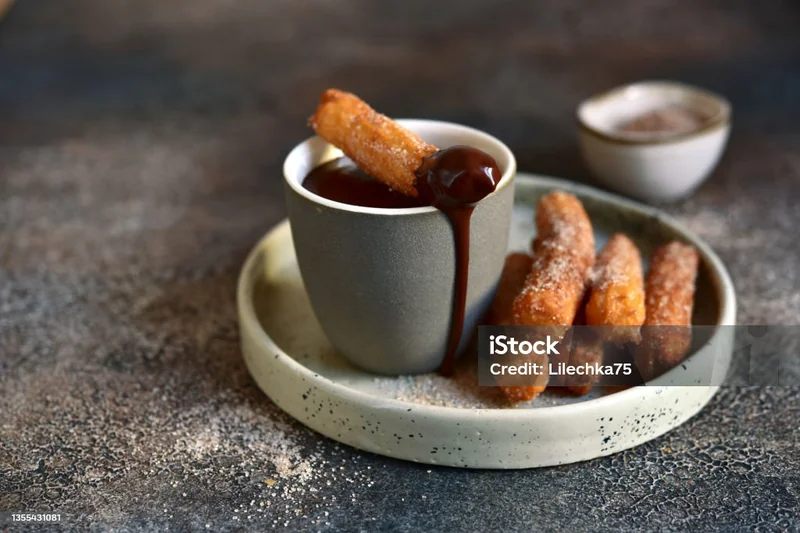
Churros are not dessert in Spain — they are breakfast: eaten at a churrería or chocolatería between 7 and 10am, dunked into a cup of thick Spanish hot chocolate that is closer to warm melted chocolate than the thin cocoa most people know. The dough is simple (water, flour, salt, sometimes a little oil) pressed through a star-shaped nozzle into hot oil until the ridged exterior crisps and the interior stays slightly doughy — the ridges are structural, increasing surface area for the chocolate to cling to. Madrid's Chocolatería San Ginés, open since 1894 and operating through the night, is the reference point: it serves only churros and porras (thicker churros) with chocolate, and the queue at 4am after a night out is part of the city's social contract.
In a small saucepan over medium heat, combine the water, sugar, salt, and vegetable oil. Bring to a boil.
Remove from heat and immediately stir in the flour until the mixture forms a ball.
Heat vegetable oil in a deep-fryer or large saucepan to 375°F (190°C).
Spoon the dough into a pastry bag fitted with a large star tip.
Pipe strips of dough into the hot oil, cutting them with scissors to your desired length.
Fry the churros until golden brown and crispy, about 2-3 minutes per side.
Remove the churros from the oil and drain on paper towels.
In a shallow dish, mix together the sugar and ground cinnamon.
Roll the warm churros in the cinnamon sugar mixture until well coated.
In a small saucepan, heat the heavy cream over medium heat until it begins to simmer.
Remove from heat and add the chopped dark chocolate. Let it sit for a minute, then stir until smooth and well combined.
Fried ridged dough sticks that are a Spanish breakfast food, eaten dunked in thick hot chocolate rather than as a dessert.
Spain, possibly via Portuguese contact with China or Moorish influence; Chocolatería San Ginés in Madrid has been the reference point since 1894.
Flour, water, salt, and sunflower oil for frying; served with thick hot chocolate (chocolate con leche).
The dough must be piped into oil that is already at 180°C — too cool and the churro absorbs oil; too hot and it burns before cooking through.
Thick Spanish hot chocolate (not thin cocoa); sugar dusted on top is optional but common.