FoodieAtlas
Recipes around the World
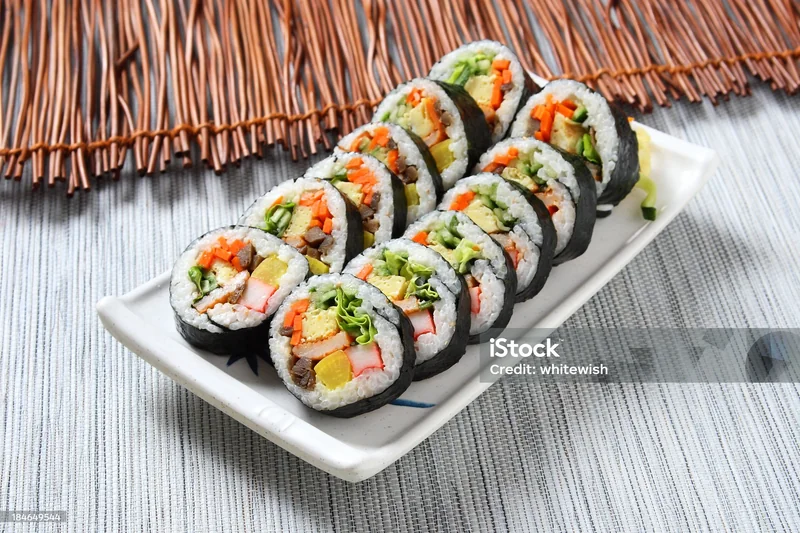
Gimbap is a beloved South Korean dish made of rice and various fillings rolled in seaweed. Often enjoyed as a snack or picnic food, it holds cultural significance as a convenient meal for outings and gatherings, symbolizing togetherness and sharing among friends and family.
In a large bowl, combine the cooked rice, sesame oil, and salt. Mix well and set aside.
In a small skillet, heat a little vegetable oil over medium heat. Pour in the beaten eggs and cook into a thin omelet. Remove from the skillet, let cool, and cut into thin strips.
In the same skillet, add more oil if needed and sauté the julienned carrots until tender. Set aside.
Sauté the julienned cucumber briefly in the same skillet. Set aside.
Place a sheet of nori on a bamboo mat, shiny side down.
Spread a thin layer of the seasoned rice over the nori, leaving about 1 inch at the top edge uncovered.
Arrange a few strips of each filling (carrot, cucumber, egg, spinach, fish cake or beef, and pickled radish) horizontally across the middle of the rice.
Using the bamboo mat, carefully roll the nori and rice over the fillings, pressing gently to keep everything together.
Continue rolling until you reach the uncovered edge. Rub a little water on the edge to seal the roll.
Using a sharp knife, cut the roll into bite-sized pieces.
Repeat with the remaining ingredients to make more rolls.
Enjoy your meal!
Gimbap is a Korean dish consisting of rice and various ingredients rolled in seaweed, often sliced into bite-sized pieces.
Gimbap originates from South Korea and is popular as a street food and picnic item.
The main ingredients include cooked short-grain rice, sesame oil, nori, carrot, cucumber, eggs, and spinach.
Making Gimbap takes approximately 60-80 minutes in total.
Gimbap is often served with pickled radish and a side of soy sauce for dipping.