FoodieAtlas
Recipes around the World

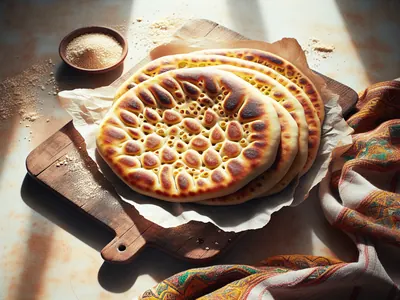
Malawah is a traditional Somali bread that boasts a soft and slightly sweet flavor, making it a beloved staple in many households. Often enjoyed during breakfast or special occasions, this versatile bread is typically paired with various dishes or enjoyed on its own. Its cultural significance is evident as it brings families together around the table, celebrating the rich culinary heritage of Somalia.
In a large mixing bowl, combine the flour, sugar, salt, and ground cardamom.
In another bowl, whisk together the eggs, milk, and vanilla extract.
Gradually add the wet ingredients to the dry ingredients, whisking continuously until you get a smooth, thin batter. The batter should be thinner than regular pancake batter but thicker than crepe batter. Add more milk if needed to achieve the right consistency.
Heat a non-stick skillet or a griddle over medium heat.
Lightly grease the skillet with a small amount of vegetable oil or ghee.
Pour a ladleful of the batter onto the skillet, using the back of the ladle to spread it into a thin circle, similar to making a crepe.
Cook for about 2-3 minutes, or until bubbles form on the surface and the edges start to lift.
Flip the malawah and cook for another 1-2 minutes on the other side until golden brown.
Remove the malawah from the skillet and place it on a plate. Cover with a clean cloth to keep it warm.
Repeat the process with the remaining batter, greasing the skillet as needed.
Malawah can be served plain, with a drizzle of honey, or sprinkled with sugar.
It can also be enjoyed with savory accompaniments such as cheese, yogurt, or a side of tea.
Enjoy your meal!
Malawah is a traditional Somali bread characterized by its soft texture and slightly sweet flavor, often enjoyed during meals.
Malawah originates from Somalia and is a popular dish that reflects the country's rich culinary traditions.
The key ingredients include all-purpose flour, sugar, salt, ground cardamom, eggs, milk, and vegetable oil or ghee.
Malawah takes approximately 30-45 minutes to prepare and cook.
Malawah is often served with honey, jam, or alongside savory dishes like stews or curries.