FoodieAtlas
Recipes around the World
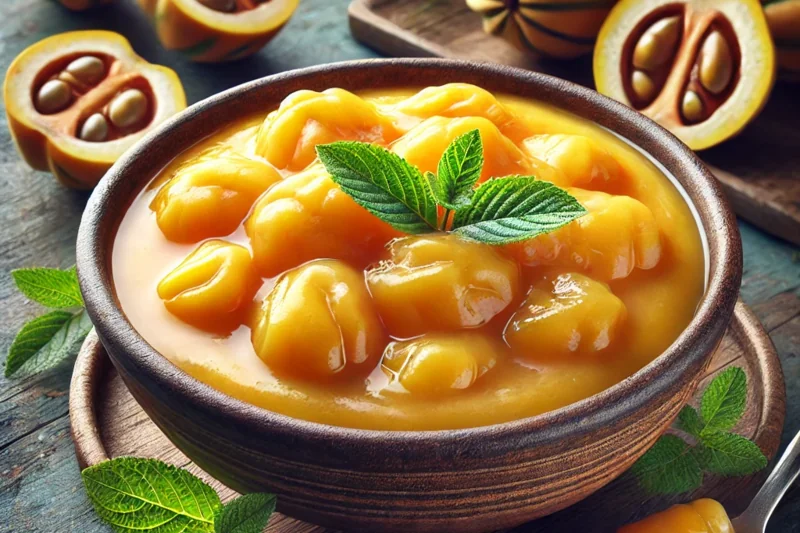
The marula tree, laden with golden-skinned fruit, signals abundance across Namibian bushland each harvest season. This prized wild fruit carries buttery, tropical-stone fruit notes that Namibians extract for preserves, liqueurs, and desserts. Folklore credits the fruit with spiritual significance, while practical cooks appreciate its natural pectin and balanced tartness. Marula transforms simple sugar and water into something luxuriously complex through slow simmering.
If using fresh marula fruit, peel and pit them. If using frozen marula, thaw and drain any excess liquid.
Place the marula fruit in a saucepan with water. Bring to a boil over medium heat.
Reduce the heat and simmer for about 10-15 minutes, or until the fruit is soft and the flavors are well-extracted.
Add sugar to the saucepan and stir until fully dissolved. Continue to simmer for another 5-10 minutes.
Stir in the lemon juice and vanilla extract (if using). Simmer for an additional 2-3 minutes.
For a smoother texture, blend the mixture with an immersion blender or in a regular blender until smooth.
If you prefer a chunkier texture, you can skip this step.
Let the mixture cool to room temperature.
Transfer to a clean jar or container and refrigerate. The marula fruit can be enjoyed as a fruit spread, topping, or in various desserts.
Marula is a small, golden fruit from the marula tree native to southern Africa. It has a buttery texture and distinctive tropical-stone fruit flavor combining sweetness with subtle tartness, making it ideal for preserves.
Marula grows wild throughout Namibia's bushland, becoming available in late summer. Namibians forage these fruits according to seasonal rhythms, honoring traditional ecological knowledge passed through generations.
Marula fruit jam requires just the fruit itself, sugar, lemon juice, and water. No added pectin is typically needed as marula possesses natural gelling properties that develop through long, slow cooking.
Use fruit at peak ripeness for deeper flavor. Cook low and slow to preserve delicate notes—rushing ruins the complexity. Taste before final sugar adjustment; marula's natural tartness balances different palates differently.
Enjoy marula jam with fresh yogurt, vanilla ice cream, or crepes. Swirl into cheesecake, spread on toast, or use as a glaze for duck or pork where sweet-tart contrast shines brilliantly.