FoodieAtlas
Recipes around the World
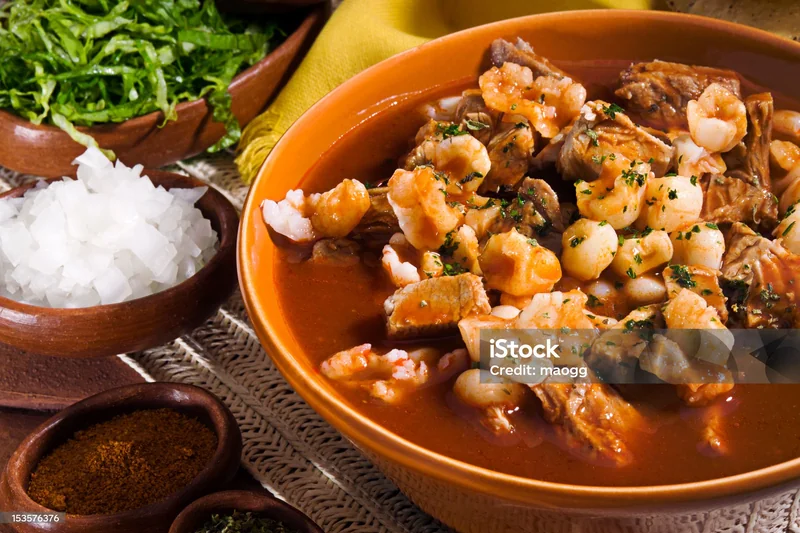
Pozole is built around hominy — dried maize kernels that have been nixtamalized (soaked in lime water) until they bloom open into large, soft, starchy rounds — simmered for hours in a broth with pork shoulder until everything becomes deeply integrated and the corn has absorbed the meat's richness. The dish appears in Aztec religious records as a ceremonial food, and modern pozole inherits that weight: it is served at baptisms, quinceañeras, weddings, and New Year's Eve, but also on cold Thursdays at restaurants across Mexico, where it functions simply as comfort food. Three versions are standard: rojo (with ancho or guajillo chili paste stirred in), blanco (the broth without chili, letting the hominy and pork flavor stand alone), and verde (tomatillo and pumpkin seed sauce). The garnish table — shredded cabbage, oregano, lime, tostadas, radish, raw onion — is not optional; it's where the diner finishes the dish.
In a large pot, combine the pork shoulder, halved onion, garlic cloves, bay leaves, dried oregano, ground cumin, salt, and water.
Bring to a boil over medium-high heat, then reduce the heat to low and simmer for about 2 hours, or until the pork is tender and easily shreds with a fork.
Remove the pork from the pot and shred it into bite-sized pieces. Set aside.
Strain the broth and discard the solids. Return the broth to the pot.
Remove the stems and seeds from the dried guajillo and ancho chiles.
Heat a skillet over medium heat and toast the chiles for about 1-2 minutes until they become fragrant. Be careful not to burn them.
Place the toasted chiles in a bowl and cover them with hot water. Let them soak for about 20 minutes until they become soft. Drain and set aside.
In a blender, combine the soaked chiles, vegetable oil, dried oregano, ground cumin, salt, and a little water (if needed). Blend until smooth.
Add the chile sauce to the pot with the strained broth.
Add the drained and rinsed hominy to the pot with the broth and chile sauce.
Bring to a simmer over medium heat and cook for about 30 minutes, allowing the flavors to meld together.
Add the shredded pork back to the pot and cook for an additional 10 minutes.
Ladle the pozole into bowls.
Slow-cooked hominy and pork soup; three versions (rojo/blanco/verde); pre-Columbian ritual food, now Mexican celebration staple.
Mexico; Aztec religious ceremony dish; nixtamal corn preparation is pre-Columbian; pork replaced the original sacrificial meat after Spanish contact.
Hominy (canned or dried nixtamalized corn), pork shoulder, garlic, onion; rojo version: ancho/guajillo chili paste; garnishes: cabbage, oregano, lime, radish, tostadas.
If using dried hominy, soak overnight and cook separately until bloomed before adding to broth — dried hominy needs 2-3 hours; canned hominy goes in at the last 30 minutes.
Tostadas, lime wedges, dried oregano, shredded cabbage, radish slices, white onion — the garnish table is essential, not optional; mezcal or cold Tecate.