FoodieAtlas
Recipes around the World
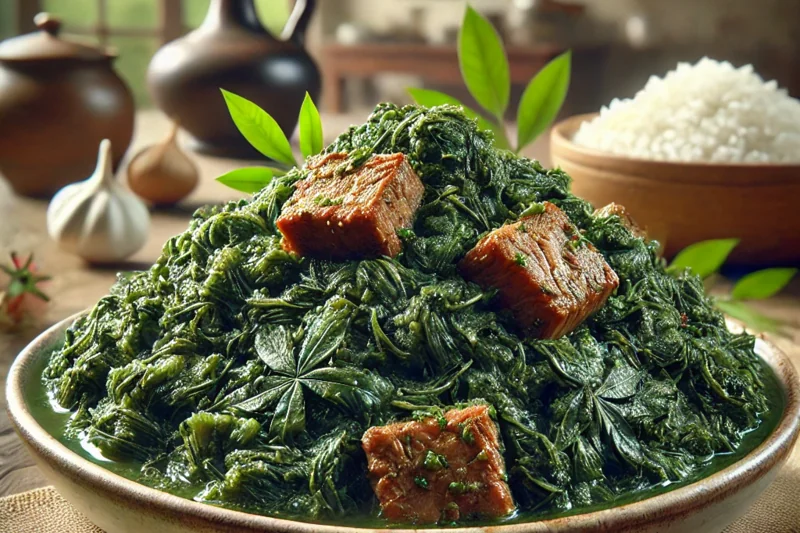
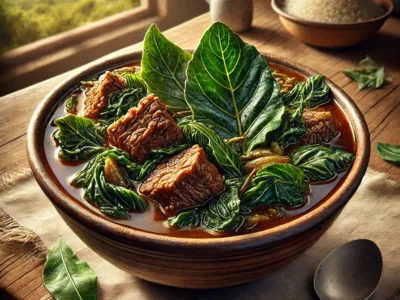
Ravitoto presents deeply flavored pork braised with aromatics until fall-apart tender, then finished with wilted cassava leaves and crushed peanuts that create a velvety sauce. This cornerstone dish of Malagasy cuisine draws on the island's abundance of native cassava plants and reflects generations of home cooking tradition. The long braising time allows pork and cassava to meld into one cohesive dish. Served alongside white rice, Ravitoto represents the comfort food of Madagascar—unpretentious but profoundly satisfying.
Heat vegetable oil in a large pot over medium heat.
Add the chopped onion and garlic, and cook until softened and fragrant.
Add the pork chunks and cook until they are browned on all sides.
Pour in the water or chicken broth, ensuring that the pork is covered.
Bring to a boil, then reduce the heat to low. Cover and let it simmer for about 1 to 1.5 hours, or until the pork is tender.
Stir in the finely chopped cassava leaves (or spinach).
Continue to cook for another 30-40 minutes, stirring occasionally. The cassava leaves should become tender and blend with the pork.
If using, stir in the crushed peanuts and soy sauce.
Season with ground black pepper and salt to taste.
Serve Ravitoto hot with rice or traditional Malagasy accompaniments.
Ravitoto is a traditional Malagasy stew where pork is slowly braised with onions, garlic, and spices until tender, then combined with finely chopped cassava leaves that cook down into the broth. Crushed peanuts add body and richness to the final sauce.
Ravitoto is a foundational Malagasy dish found throughout the island, reflecting the availability of both pork and cassava leaves in local markets and home gardens. It represents the essence of Madagascar's home-cooked cuisine.
The core ingredients are pork (preferably with bones for extra flavor), cassava leaves (or spinach as a substitute), onions, garlic, and crushed peanuts that enrich the broth. Soy sauce and spices deepen the savory profile.
Brown the pork well at the start to build flavor. Don't skip the long braising—this is what makes the meat tender and melds all flavors. If fresh cassava leaves are unavailable, frozen works well; thaw thoroughly before chopping and adding.
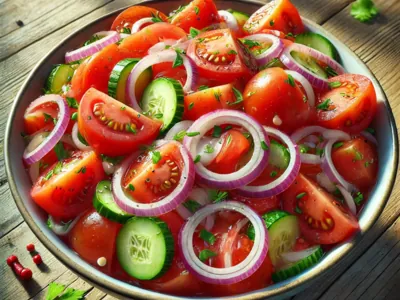
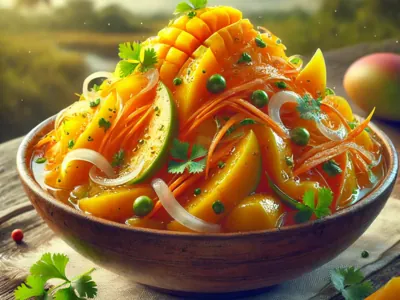
Ravitoto is always served with steamed white rice to soak up the flavorful broth. A fresh salad like Lasary Manga or Lasary Voatabia provides brightness. Some serve it with fried plantains or crusty bread on the side.