FoodieAtlas
Recipes around the World
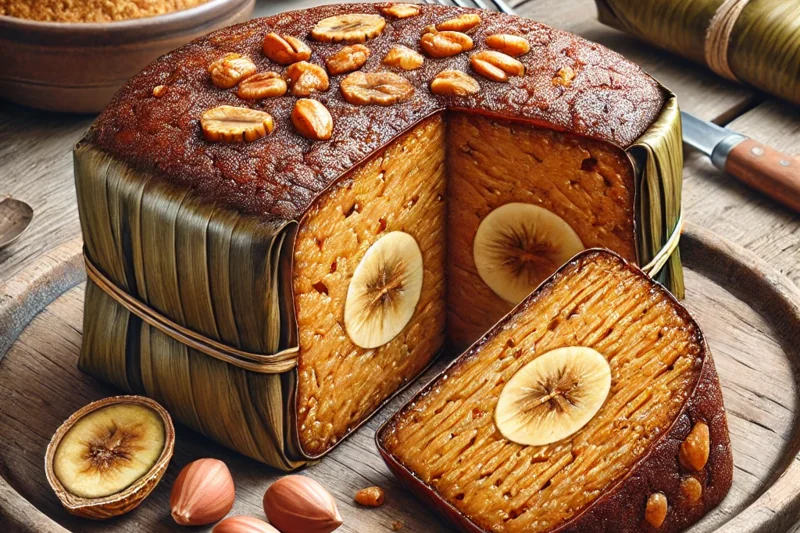
Koba presents a tender, slightly dense cake with a subtle coconut sweetness, its rice flour base creating a satisfying, slightly gritty crumb. This traditional Malagasy snack has been made for generations, handed down through families who wrap the batter in banana leaves for steaming. The dish embodies Madagascar's resourcefulness, using humble pantry staples—rice flour, sugar, and coconut—to create something memorable. With an optional addition of crushed peanuts, Koba offers mild tropical flavor that's neither overly sweet nor plain, making it an ideal afternoon treat or dessert.
In a large bowl, combine the rice flour and brown sugar. Mix well.
Gradually add the coconut milk and water, stirring continuously to create a smooth batter. If using, stir in the crushed peanuts and vanilla extract.
Cut banana leaves or parchment paper into squares. If using banana leaves, lightly heat them over a flame to make them more pliable.
Spoon the batter onto the center of each banana leaf or parchment paper square.
Fold the edges of the leaf or paper over the batter to form a neat package. Secure with string or by folding the edges.
Place the wrapped packages in a steamer basket. Steam over boiling water for about 30-40 minutes, or until the batter is firm and cooked through.
Remove the Koba from the steamer and let cool before unwrapping.
Koba is a steamed cake made by mixing rice flour, brown sugar, and coconut milk into a batter, then wrapping it in banana leaves or parchment and steaming until firm. The result is a tender cake with mild sweetness and the subtle flavor of coconut.
Koba is a traditional snack from Madagascar, where it's been prepared for generations as a street food and household dessert. It reflects the island's reliance on rice, coconut, and other tropical ingredients that grow abundantly in the region.
The essential ingredients are rice flour for the base, brown sugar for sweetness, and coconut milk for richness and flavor. Some versions include crushed peanuts for added texture and protein, and vanilla extract for additional aromatic complexity.
Whisk the batter thoroughly to avoid lumps and ensure even cooking. If using banana leaves, briefly heat them over a flame to make them pliable. Don't skip the cooling step after steaming—Koba slices better and has better texture once cool.
Koba is traditionally eaten on its own as a snack or light dessert, often paired with hot tea or coffee. Some serve it with fresh fruit like mango or papaya for brightness, or with a drizzle of honey for extra sweetness.