FoodieAtlas
Recipes around the World
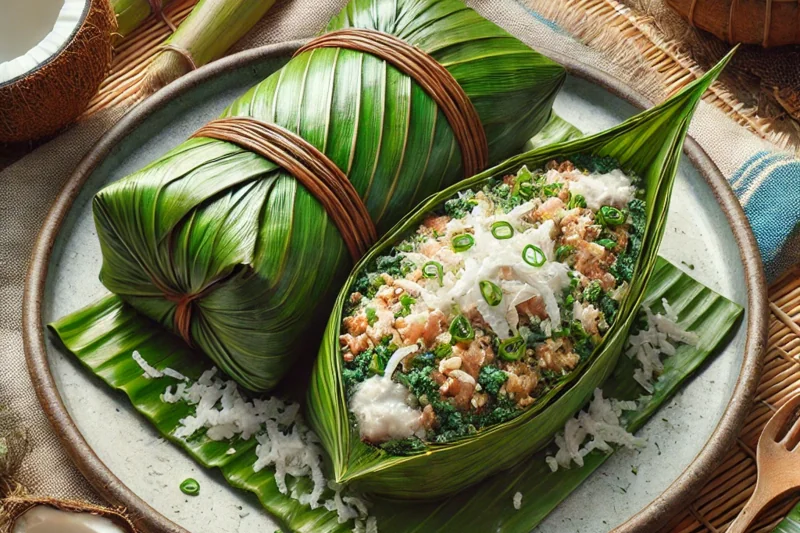
Palusami delivers silky taro leaves filled with creamy, aromatic coconut that melts on the tongue, fragrant with garlic and onion. These leaf parcels are steamed until tender, a preparation that softens the taro's slight earthiness and infuses it with coconut richness. Throughout the Pacific, palusami appears with local variations—this Kiribati version honors island traditions of resourcefulness, using abundant taro and coconut. The dish represents Pacific Island communal cooking, where family members gather to prepare leaf-wrapped parcels, a meditative, social practice that connects past to present.
Heat the vegetable oil in a large pan over medium heat.
Add the finely chopped onion and cook until translucent.
Stir in the minced garlic and cook for another minute until fragrant.
In a bowl, combine the grated coconut with the coconut milk, salt, black pepper, and dried thyme (if using). Mix well.
Add the coconut mixture to the cooked onion and garlic. Stir to combine and let it cook for about 5 minutes, or until the mixture thickens slightly. Remove from heat.
If using taro leaves, clean them thoroughly and remove any tough stems. If using banana leaves, clean and soften them by briefly passing them over a flame or steaming them.
Place a large piece of taro or banana leaf on a flat surface.
Spoon some of the coconut mixture onto the center of the leaf.
Fold the leaf over the mixture, creating a parcel. Secure the parcel with kitchen twine or toothpicks if necessary. Repeat with the remaining mixture and leaves.
Place the parcels in a steamer basket or on a rack in a large pot with a small amount of water in the bottom. Steam over medium heat for about 30-40 minutes, or until the filling is cooked through and the leaves are tender.
Remove the parcels from the steamer and let them cool slightly before unwrapping. Serve hot as a side dish or main course.
Taro leaves are sold at Pacific Island markets and some Asian grocery stores, sometimes labeled "callaloo" or "dasheen greens." Banana leaves work as a substitute wrapper, though the flavor won't be identical.
Steaming is traditional and creates the perfect texture—it cooks the taro gently without drying it, and distributes heat evenly to meld flavors. Baking would have different results.
Yes, palusami can be assembled early in the day and steamed before serving. It also reheats well, making it convenient for meal preparation.
Similar dishes exist across the Pacific (lu'au in Hawaii, laulau in Samoa). Palusami's specific filling and leaf choice reflect Kiribati's local ingredients and taste preferences.
The leaves should be tender and yielding, and the filling creamy, not grainy. A toothpick inserted through the parcel should encounter no resistance.