FoodieAtlas
Recipes around the World
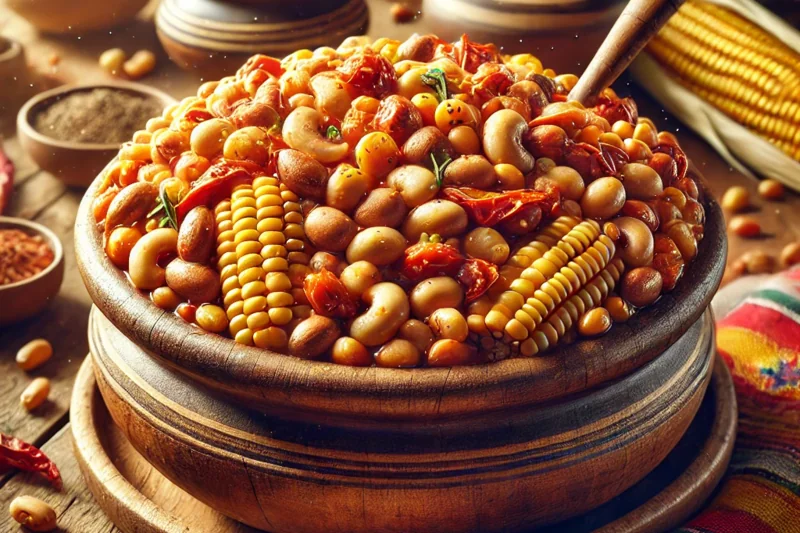
Githeri combines soft, sweet corn kernels with creamy beans in a simple, deeply satisfying way that epitomizes Kenyan comfort food. This Kikuyu dish (from central Kenya's Kikuyu people) has become a national staple, eaten at home, in schools, and at roadside restaurants. The beauty of githeri lies in its simplicity—just corn and beans boiled until tender with basic seasonings—yet it's nutritionally complete, providing carbohydrates, protein, and fiber. Githeri represents self-sufficiency and resourcefulness: using what grows locally and combining basic ingredients into nourishment.
Heat the vegetable oil or ghee in a large pot over medium heat.
Add the chopped onion and cook until translucent.
Stir in the minced garlic and cook for another minute until fragrant.
Add the lamb or chicken pieces and cook until browned on all sides.
Stir in the ground cumin, coriander, turmeric, cinnamon, cardamom, black pepper, and salt. Cook for another 2 minutes to toast the spices.
Mix in the plain yogurt and cook for 5 minutes, allowing the flavors to meld together.
Rinse the rice under cold water until the water runs clear.
Add the rice to the pot with the meat. Stir to combine.
Pour in the water or chicken broth and bring to a boil.
Reduce the heat to low, cover the pot, and simmer for about 20-25 minutes, or until the rice is tender and the liquid is absorbed.
Stir in the raisins and slivered almonds (if using). Cook for an additional 5 minutes to heat through.
Garnish with fresh cilantro or parsley if desired.
Serve warm as a main dish.
Kidney beans are most common, though any dried beans work. Some cooks use black-eyed peas or mixed beans. The beans are soaked and boiled until creamy.
Githeri is typically served hot, warm from the pot. The warmth brings out the flavors of the corn and beans. It can be eaten leftover at room temperature, but hot is preferred.
Both corn and beans are boiled together in the same pot with water, onion, and salt. The cooking time depends on the beans' age and size—it can take 1-2 hours until both are tender.
Githeri is often eaten with avocado, fresh tomato slices, or chapati bread. Some add a dollop of butter or oil for richness. It's complete enough to be eaten alone as a meal.
Yes, some cooks add diced vegetables like carrots, onions, or tomatoes during cooking. However, simple githeri (just corn and beans) is equally traditional and valued.