FoodieAtlas
Recipes around the World
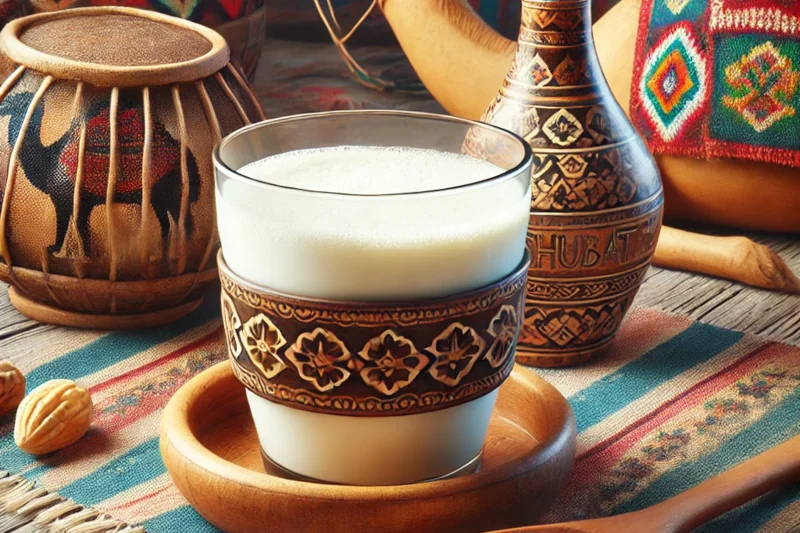
Shubat delivers a complex, tangy taste with a subtle fizz and slight warmth from natural fermentation, refreshing and energizing in desert heat. Created by fermenting camel milk with natural cultures, shubat represents thousands of years of nomadic adaptation in the Central Asian steppes. This drink is more than refreshment—it's loaded with probiotics and nutrients, making it traditionally valued for its medicinal properties among Kazakh herders. The cultural significance of shubat lies in its connection to the camel, an animal sacred in Kazakh life and central to survival in harsh, arid regions.
In a clean container, pour the camel's milk (or cow's milk if using).
Stir in the plain yogurt and kefir (if using) to introduce beneficial bacteria for fermentation.
Cover the container with a clean cloth or lid.
Leave the container at room temperature (ideally around 70°F/21°C) for about 24-48 hours to ferment. The fermentation time can vary depending on the ambient temperature and desired sourness.
Stir the mixture occasionally during the fermentation process.
After the fermentation period, strain the shubat through a fine-mesh sieve to remove any curds or solids.
Transfer the strained shubat to clean bottles or jars.
Refrigerate the shubat for at least 2 hours to chill and develop its flavor.
Serve the shubat chilled. It can be enjoyed as a refreshing, tangy drink or as part of a traditional Kazakh meal.
Yes, shubat naturally develops a very low alcohol content (typically 0.5-1%) during fermentation. This is a natural byproduct of the fermentation process and is considered part of its authenticity. The alcohol content is often higher in historically prepared versions.
Camel milk is the original and preferred ingredient because it ferments differently than cow's milk, creating the distinctive tangy, slightly fizzy flavor unique to authentic shubat. Camel milk also has higher protein and unique antimicrobial properties that aid fermentation.
Shubat is fermented camel milk, while kumiss (kymyz) is fermented mare's milk. Shubat is thicker and creamier, while kumiss is more liquid. Both are Central Asian fermented beverages with similar cultural importance but slightly different flavor profiles and fermentation times.
Shubat continues to ferment slowly even when refrigerated and tastes slightly different each day. It typically remains drinkable for 1-2 weeks refrigerated, though traditional versions aged longer were valued for stronger flavor and preservation properties.
Shubat is rich in probiotics, calcium, and protein, making it traditionally valued for digestive health and overall nutrition. Many Kazakh nomads relied on shubat as a complete food source during long journeys across the steppes.