FoodieAtlas
Recipes around the World
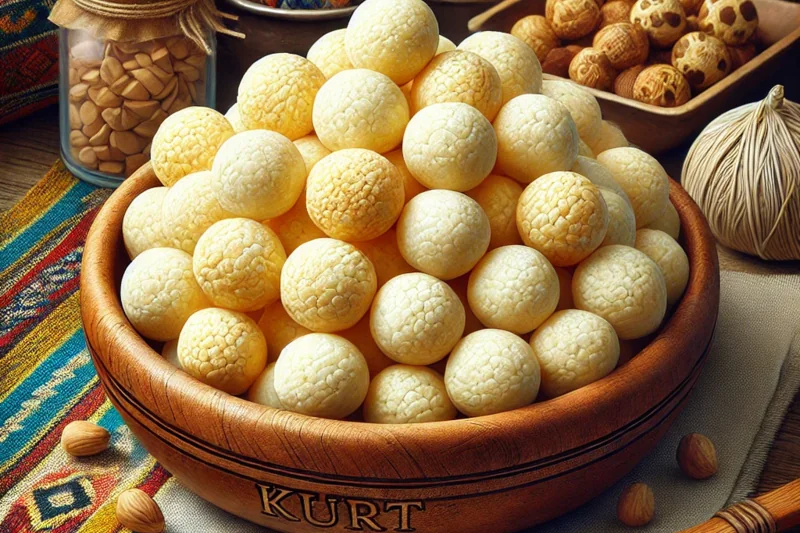
Kurt delivers a pungent, tart tanginess with a chewy, slightly firm texture, intensifying as they age. These dried yogurt balls were the perfect survival food for Kazakh nomads, lightweight and shelf-stable for months, requiring no refrigeration. The process of straining, rolling, and drying yogurt by hand has been practiced for centuries, turning a perishable food into a portable protein source. Kurt still represents self-sufficiency and resourcefulness, transforming simple milk into a versatile ingredient used in soups, eaten as a snack, or crumbled as a seasoning.
Pour the fresh yogurt into a large bowl.
Add the salt to the yogurt and mix well.
Line a sieve or fine-mesh strainer with cheesecloth or a clean kitchen towel.
Place the sieve over a large bowl to catch the whey.
Pour the yogurt into the lined sieve.
Cover the yogurt with the cheesecloth or towel and let it drain for about 24 hours at room temperature. The longer it drains, the thicker the kurt will become.
After the yogurt has drained, you will have a thick, creamy mass.
Transfer the thickened yogurt (kurt) into small, bite-sized balls or patties using your hands or a spoon.
Place the kurt balls onto a clean drying rack or a tray lined with parchment paper.
Allow the kurt to dry at room temperature for several days until it becomes firm and hard. This can take anywhere from 3 to 7 days, depending on the humidity and temperature.
Once fully dried, store the kurt in an airtight container.
Kurt can be eaten as a snack, used in soups, or added to various dishes for a tangy flavor.
Properly dried kurt can last for months or even years when stored in airtight containers in a cool, dry place. This shelf stability made them invaluable for nomadic tribes crossing the steppes without refrigeration.
Full-fat yogurt works best, as it creates richer, creamier kurt. Plain yogurt without additives is preferred. Some families make kurt from buttermilk or a mixture of yogurt and milk for different flavor profiles.
The pungent aroma and intense tang come from the fermentation and drying process, which concentrates the lactic acid and bacterial cultures. Many people consider this sharp, distinctive flavor the mark of authentic, well-made kurt.
Kurt can be added whole to soups, crumbled into grain dishes, or eaten as a snack. When cooked in broth, they soften and add a savory tang. Some people soak them in water to make a tangy drink.
Kurt is specifically dried yogurt, distinct from dried milk curd (qurt) in other regions. The fermentation before drying creates kurt's unique tanginess and preserves beneficial probiotics.