FoodieAtlas
Recipes around the World
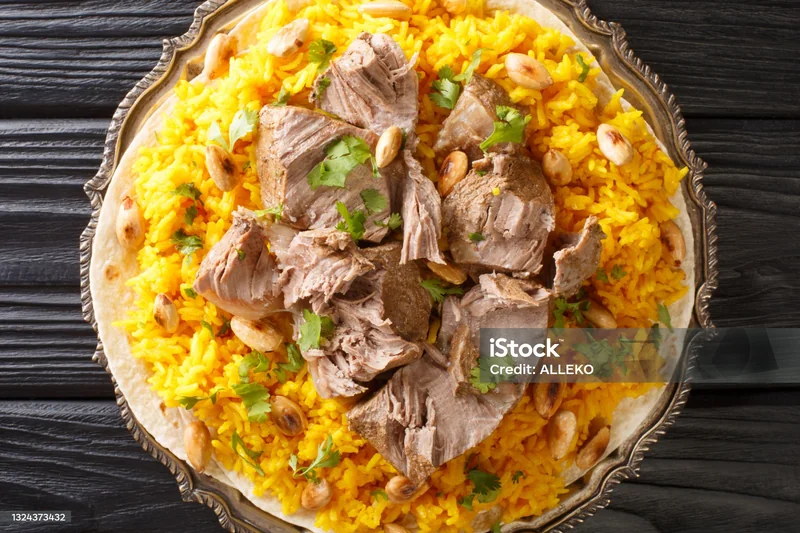
Mansaf arrives as a spectacle: an entire lamb draped across rice, drenched in a pale, creamy jameed sauce with pine nuts scattered across. The aroma is complex—cumin and cinnamon mingling with the tangy fermented yogurt. This is the national dish of Jordan, born from Bedouin tradition, eaten communally with hands tearing meat and bread soaking sauce. The jameed (dried fermented goat yogurt) is what defines mansaf, giving it a flavor no other dish has—sour, ancient, deeply particular. Eating mansaf is not casual; it's ceremonial, shared, a statement about hospitality and togetherness.
In a large pot, heat the olive oil or ghee over medium heat.
Add the chopped onion and cook until softened and translucent, about 5 minutes.
Stir in the minced garlic and cook for another minute.
Add the lamb chunks to the pot and brown on all sides.
Stir in the ground cumin, ground coriander, ground turmeric, ground cinnamon, black pepper, and salt. Mix well.
Pour in the water or lamb broth and bring to a boil.
Reduce the heat to low, cover the pot, and simmer for 1.5 to 2 hours, or until the lamb is tender and cooked through.
Blend the soaked jameed with 1/2 cup of water until smooth. If the sauce is too thick, add more water as needed.
Add the jameed sauce to the lamb and simmer for an additional 15-20 minutes, allowing the flavors to meld together.
Rinse the basmati rice under cold water until the water runs clear.
In a separate pot, cook the rice according to package instructions. Fluff with a fork when done.
To serve, spread a layer of rice on a large serving platter.
Spoon the lamb and sauce over the rice.
Garnish with toasted pine nuts or almonds and chopped fresh parsley.
Jameed is dried, fermented goat's yogurt formed into balls, a traditional Middle Eastern ingredient. Find it in specialty Middle Eastern markets, online suppliers, or Indian grocery stores (sometimes labeled as kashk). There's no perfect substitute, though regular yogurt mixed with a touch of sumac approximates the tang.
Lamb is traditional and its richness balances the tangy jameed sauce. Beef works; chicken is less ideal as the sauce overpowers its delicate flavor. If using chicken, expect a slightly different result.
Bedouin tradition dictates eating communally around a shared platter. Tearing meat and bread with hands connects diners and makes the meal social and intimate. Utensils are modern additions; tradition remains more authentic.
Traditionally, an entire lamb is slow-roasted over open fire, then the jameed sauce is poured over. Home versions simplify this by cutting meat into chunks. The principle—long, slow cooking until meat falls apart—remains constant.
Pine nuts are most traditional and prized. Slivered almonds or cashews are common substitutes. Toasting them first brings out their flavor. The nuts add textural contrast to soft meat and rice.