FoodieAtlas
Recipes around the World
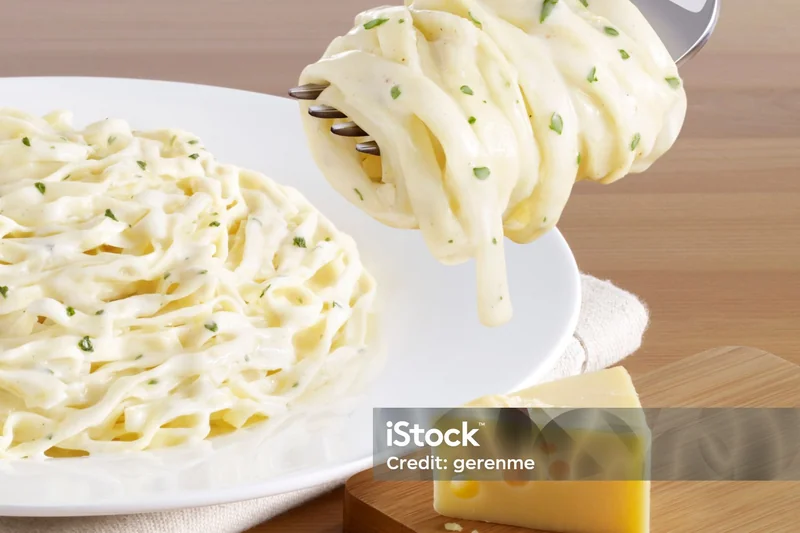
Alfredo di Lelio invented this dish at his Rome restaurant in 1914 as a remedy for his wife's postpartum nausea: fresh fettuccine tossed with an unusual amount of butter and aged Parmigiano-Reggiano until the two emulsified into a glossy, clinging sauce—no cream, no garlic, no chicken. American tourists Douglas Fairbanks and Mary Pickford visited the restaurant in 1927, brought the recipe back, and it entered American Italian cooking where cream was added and the dish became something unrecognizable to its inventor. The Roman original is a technical exercise in balance: the pasta must be freshly made so it releases enough starch, the butter must be at room temperature, and the cheese must be very finely grated—only then does the emulsion hold without breaking into grease.
Bring a large pot of salted water to a boil.
Cook the fettuccine according to the package instructions until al dente.
Reserve about 1 cup of pasta water, then drain the fettuccine and set aside.
In a large skillet or saucepan, melt the butter over medium heat.
Add the minced garlic and cook for about 1 minute until fragrant.
Pour in the heavy cream and bring to a gentle simmer. Cook for about 5 minutes, stirring occasionally, until the cream has slightly thickened.
Reduce the heat to low and gradually stir in the grated Parmesan cheese until melted and well combined. The sauce should be smooth and creamy.
Season with salt and pepper to taste.
Add the cooked fettuccine to the skillet with the Alfredo sauce.
Toss the pasta gently to coat it evenly with the sauce. If the sauce is too thick, add a little reserved pasta water to reach the desired consistency.
Garnish the Fettuccine Alfredo with chopped fresh parsley if desired.
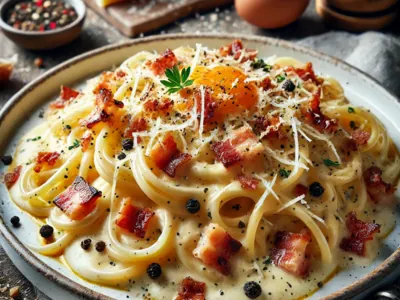
Fresh egg fettuccine in a butter-Parmesan emulsion. The Roman original contains no cream—cream is the American corruption.
Rome, 1914. Alfredo di Lelio created it as a postpartum remedy for his wife. The dish became famous globally when American tourists brought it back.
Fresh fettuccine, unsalted butter (at room temperature), Parmigiano-Reggiano, and pasta water. That is all.
The sauce forms through vigorous tossing—pasta water + starch + butter + cheese emulsify together. Never add cream. Pasta and butter must both be very hot.
Nothing elaborate—maybe a simple green salad. Drink Pinot Grigio or light Frascati alongside.