FoodieAtlas
Recipes around the World
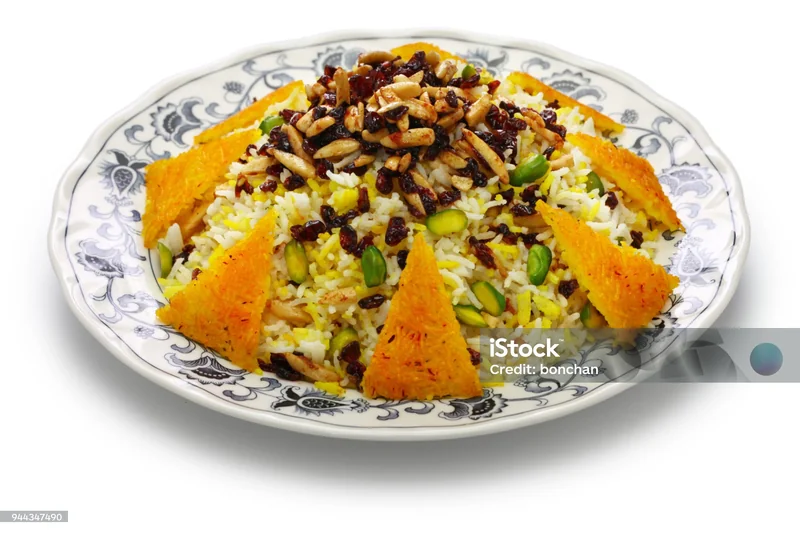
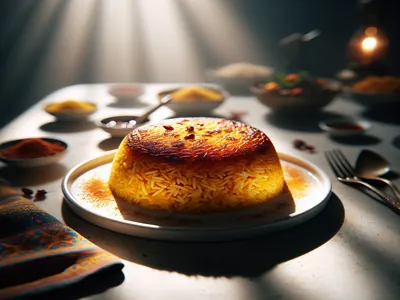
Zereshk Polo's jeweled appearance—saffron-golden rice studded with crimson barberries—announces a dish that balances complexity and elegance. Barberries' sharp tartness cuts through buttery rice, creating a sensory experience that defines Persian hospitality. This carefully constructed dish appears at weddings, religious celebrations, and formal dinners, signaling respect for guests. The technique of soaking, partial cooking, and layering requires patience and precision. Each grain of rice absorbs subtle flavors from saffron, cinnamon, and the caramelized barberries, creating depth that only time and technique can achieve.
Rinse the basmati rice under cold water until the water runs clear. Soak the rice in a large bowl of water for at least 30 minutes, then drain.
In a large pot, bring 4 cups of water to a boil. Add a pinch of salt and the soaked and drained rice. Cook the rice for 5-7 minutes until it's partially cooked but still firm in the center. Drain the rice in a colander.
Rinse the dried barberries under cold water. In a small saucepan, heat 2 tablespoons of butter or oil over medium heat. Add the barberries, sugar, and optional ground cinnamon, turmeric, and lemon juice. Sauté for 2-3 minutes until the barberries are plump and slightly caramelized.
In the same pot used to cook the rice, spread a layer of the partially cooked rice. Add a few spoonfuls of the barberry mixture on top. Gently mix, but be careful not to break the rice grains. Continue layering the rice and barberries until all the rice and barberry mixture are used.
Reduce the heat to low. Cover the pot with a clean kitchen towel or a lid wrapped in foil to catch steam. Steam the rice for 30-40 minutes, allowing the flavors to meld together.
Gently fluff the rice and barberries with a fork. Garnish with slivered almonds or pistachios if desired. Serve alongside your favorite dishes.
Zereshk Polo is a Persian rice dish featuring fragrant basmati rice infused with saffron, layered with caramelized barberries (small tart berries), and often garnished with toasted nuts. The combination creates both visual beauty and complex flavor balance.
Zereshk Polo is foundational to Persian cuisine, originating in Iran where it's served at celebrations, weddings, and formal dinners. Different regions may vary the preparation, but the saffron-barberry combination is universally respected.
Essential ingredients include basmati rice, dried barberries (zereshk), saffron threads, butter or oil, sugar for caramelizing barberries, and optional cinnamon. Slivered almonds or pistachios provide traditional garnish and texture contrast.
Soak rice properly to ensure even cooking and fluffy grains. Toast saffron briefly before steeping in hot water to intensify color and flavor. Caramelize barberries in butter with sugar for depth. Don't skip the steaming step—it allows rice to finish cooking and absorb flavors. Use the towel-covered-lid technique to trap steam.
Zereshk Polo pairs beautifully with grilled kebabs, chicken khoresh stews, or roasted meats. Serve alongside Persian yogurt and fresh herbs. The rice's sweet-tart profile complements rich meat dishes perfectly.