FoodieAtlas
Recipes around the World
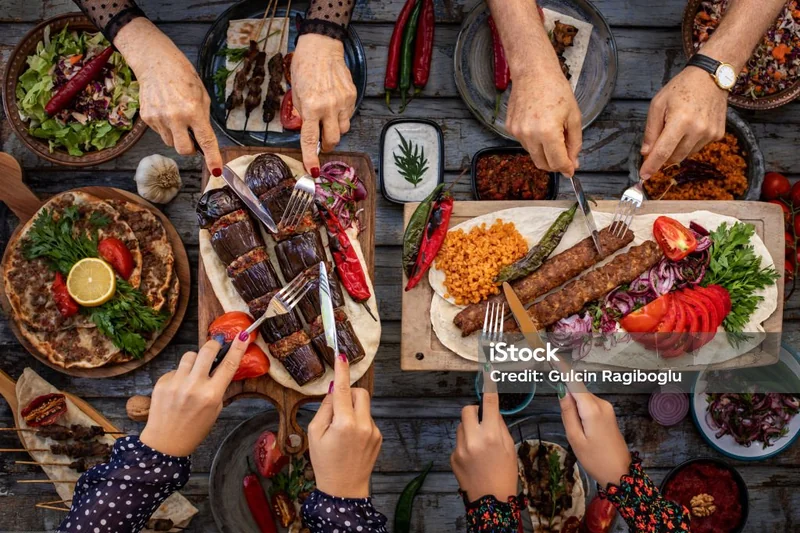
Kebab emerges from the grill as a dark, smoky sausage-shaped form wrapped around a metal skewer, its surface charred in patches. The dish has roots in Persian military camps, where soldiers grilled meat over field fires to sustain long journeys and campaigns. This practice evolved into the kebab houses of today's Iran, where skilled grill workers are revered craftspeople. The minced meat—raw when shaped—transforms during grilling, its fat rendering out and basting the interior until it's tender yet crumbly.
In a large bowl, combine the ground meat, grated onion, minced garlic, parsley, cilantro, cumin, coriander, paprika, black pepper, salt, turmeric, and cayenne pepper. Mix thoroughly until well combined.
Divide the mixture into equal portions. Shape each portion into long, sausage-like shapes around the skewers, pressing firmly to ensure they stay on the skewers.
Preheat your grill to medium-high heat.
Place the kebabs on the grill and cook for about 10-15 minutes, turning occasionally, until they are browned and cooked through. The internal temperature should reach 160°F (71°C).
Remove the kebabs from the grill and let them rest for a few minutes. Serve with your choice of sides, such as rice, salad, or flatbreads.
Grated onion releases its enzymes, which break down the meat's collagen and help it bind into a cohesive mass around the skewer. The onion also adds moisture that keeps the interior tender while the exterior browns. This is non-negotiable—chopped onion won't produce the same result.
Press the shaped meat very firmly and consistently around the skewer. Cold meat (refrigerate the mixture for 1-2 hours before shaping) adheres better than room-temperature meat. Oil the skewer lightly before shaping if the meat still slips.
Koobideh is the minced kebab (what you're making). Kebab barg uses thinly sliced marinated meat, while joojeh uses chicken pieces. Each has its own grilling time and technique, though all are served on skewers over charcoal.
Charcoal is traditional and produces superior flavor through its smoky emissions and intense heat. Gas works if charcoal isn't available, though the meat will lack the characteristic char and smoke. Charcoal is worth sourcing if you're serious about the dish.
Lamb was historically more available in Persian regions, but beef became common in urban areas. Some kebab masters prefer 100% lamb for flavor, others prefer beef for tenderness, and many use a blend to balance both qualities. There's no single "correct" ratio—it reflects regional and family preference.