FoodieAtlas
Recipes around the World
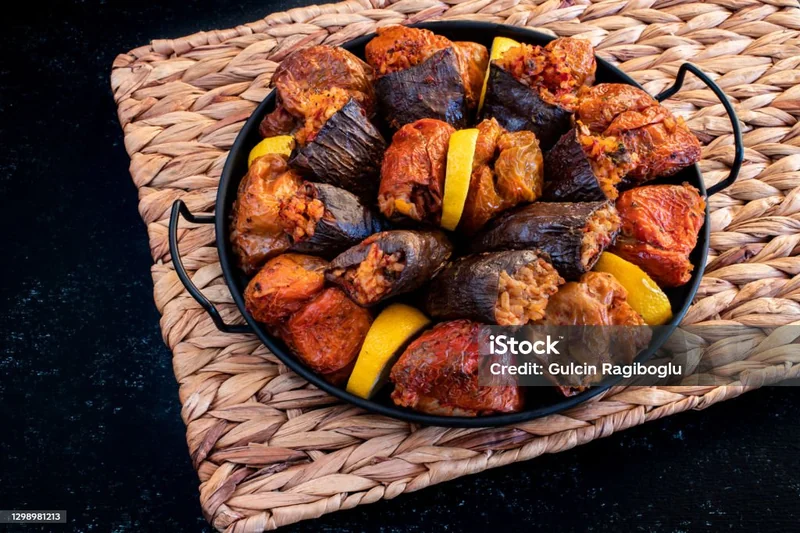
Dolmeh arrives as neat, thumb-sized bundles wrapped in dark green grape leaves, often served chilled or at room temperature. The technique spread throughout the Ottoman and Persian empires, each region adapting fillings to local ingredients—some versions are vegetarian, others include meat and dried fruit. The contrast between the tart grape leaf and the warm, spiced rice interior defines the dish's appeal. They're practical food: made in batches, stored for days, eaten as snacks, starters, or light meals.
Rinse the rice and lentils separately under cold water. Cook the rice in boiling salted water until slightly undercooked (about 5 minutes). Drain and set aside.
Cook the lentils in boiling water until tender but not mushy (about 15 minutes). Drain and set aside.
In a large skillet, heat the vegetable oil over medium heat. Sauté the chopped onion until soft and translucent.
Add the minced garlic and cook for an additional minute.
Stir in the ground beef or lamb (if using) and cook until browned. Drain any excess fat.
Add the turmeric, cinnamon, cumin, dried mint, and salt and pepper. Stir to combine.
Add the pine nuts and dried currants or raisins, then mix in the cooked rice and lentils. Stir in the fresh parsley, dill, and cilantro. Adjust seasoning with salt, pepper, and lemon juice.
If using fresh grape leaves, blanch them in boiling water for about 2 minutes until softened. Drain and set aside. If using jarred grape leaves, rinse them under cold water and pat dry.
Lay a grape leaf flat on a clean surface, vein side up. Place a spoonful of the filling mixture in the center of the leaf.
Fold the sides of the leaf over the filling, then roll up the leaf from the bottom to form a tight, neat roll. Repeat with the remaining leaves and filling.
Arrange the stuffed grape leaves in a single layer in a large pot. Add the vegetable or chicken broth to the pot, making sure the dolmeh are covered with liquid.
Place a plate on top of the dolmeh to keep them submerged and bring to a boil. Reduce heat to low, cover, and simmer for 45-60 minutes, until the grape leaves are tender and the filling is cooked through.
Allow the dolmeh to cool slightly before serving. They can be enjoyed warm or at room temperature, often with yogurt or a fresh salad.
No—parboil it for only 5 minutes so it's still slightly firm. It will finish cooking inside the dolmeh during the 45-60 minute simmer. Fully cooked rice will become mushy and the dolmeh will fall apart.
Place the leaf vein-side up (the raised lines). Put a small spoonful of filling in the center, not too much. Fold the sides toward the center, then roll from the bottom tightly but gently. Practice makes perfect—your first few will tear, and that's fine.
Fresh leaves are preferable if you have access to them (grapevine orchards or some Middle Eastern markets). Blanch them for 2 minutes to soften. Jarred leaves are more convenient and perfectly acceptable, just rinse the brine off well.
The plate holds the dolmeh submerged, preventing them from floating to the surface where they'd dry out and toughen. It also helps them stay compact and prevents unraveling. A smaller plate or even a heavy bowl works.
They're excellent both ways. Warm, they're comforting and the spices shine. Cold or at room temperature, they're refreshing, lighter, and perfect for packed lunches. Most Persian families make them a day ahead and serve chilled with yogurt.