FoodieAtlas
Recipes around the World
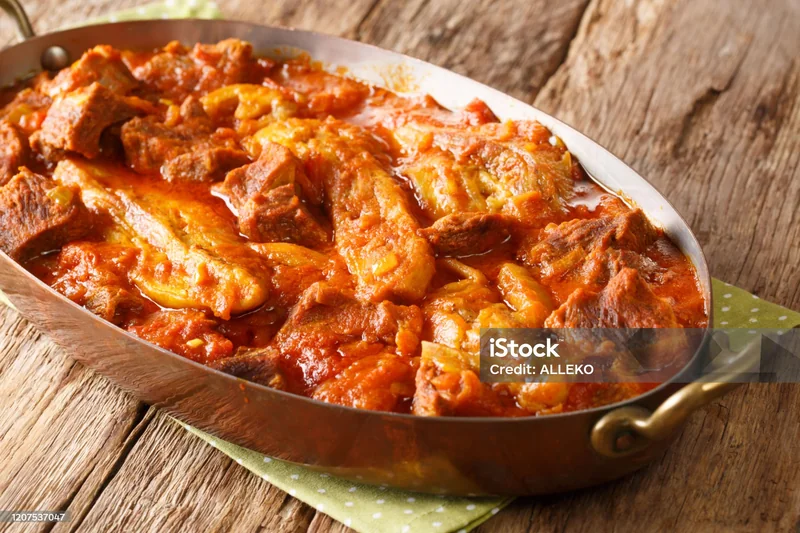
Bademjan arrives as a warm pile of deep purple eggplant slices coated in rust-colored tomato sauce infused with cinnamon and turmeric. The word simply means "eggplant" in Persian, and the dish evolved from ancient times when eggplants arrived from South Asia. In Iranian cooking, bademjan is the vegetarian answer to meat stews—substantial enough for a main course, humble enough to accompany kebab. The frying step makes the eggplant creamy inside while the sauce binds everything with warmth and spice.
Slice the eggplants into rounds or cubes. Sprinkle with salt and let them sit for about 30 minutes to draw out excess moisture. Rinse and pat dry with a paper towel.
In a large skillet, heat the vegetable oil over medium heat. Add the eggplant slices and cook until golden brown on both sides, about 5-7 minutes per side. Remove and set aside.
In the same skillet, add a little more oil if needed and cook the chopped onion until soft and translucent, about 5 minutes.
Add the minced garlic and cook for an additional minute.
Stir in the turmeric, cumin, cinnamon, and black pepper. Cook for 1-2 minutes until the spices are fragrant.
Add the diced tomatoes and tomato paste. Stir to combine and simmer for 10 minutes, until the sauce thickens.
Add the fried eggplant slices to the tomato sauce. Stir gently to coat the eggplants with the sauce. Simmer for another 10-15 minutes until the eggplants are tender and the flavors are well blended.
Stir in the fresh parsley, cilantro, and dried mint if using. Adjust seasoning with salt and lemon juice if desired.
Serve hot as a main or side dish with rice or bread.
Eggplants are spongy and absorb water from the air. Salting draws out this moisture before cooking, preventing the eggplant from becoming waterlogged and greasy during frying. This step is essential for proper texture. Don't skip it.
Yes. Frying browns the exterior and softens the interior before it meets the sauce. Boiling or steaming eggplant produces mushy, watery results. Frying creates the creamy-firm texture that defines bademjan. Oil isn't the enemy here—it's your tool.
The slight sweetness of cinnamon balances the acidity of tomatoes. In Persian cooking, this sweet-savory balance appears across many dishes. The cinnamon isn't meant to taste dessert-like—it's a supporting player that adds warmth and complexity.
Yes, and it improves after a day. Make it fully, cool it, and refrigerate for up to 3 days. Reheat gently on the stovetop, adding a splash of water if the sauce has thickened too much. Freezes well for up to 2 months.
Italian caponata is sweeter (with sugar), crunchier (with vinegar), and often contains olives and capers. Bademjan is more herbaceous, quieter in its spicing, and more cohesive as a cooked-down sauce. They're cousins from the same ancient eggplant-loving region, but distinctly different.