
FoodieAtlas
Recipes around the World
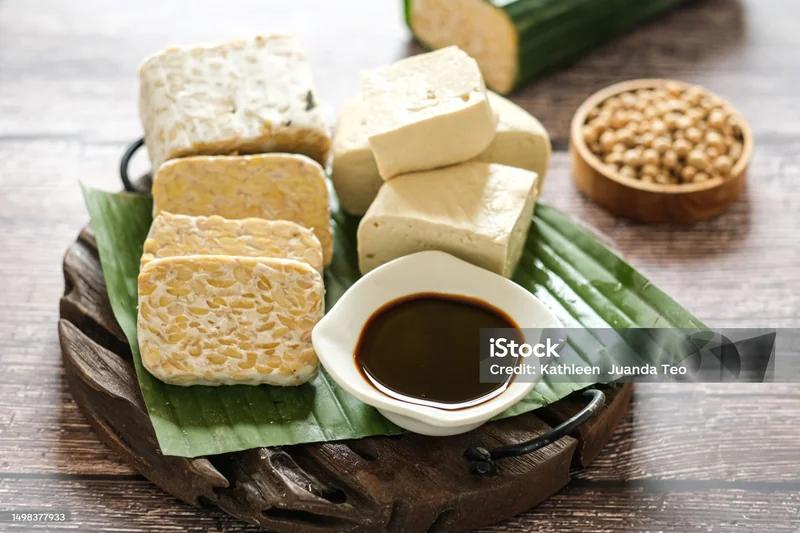
Tempeh's nutty aroma and firm, creamy texture make it distinctly different from tofu. Originating in Indonesia, this fermented soybean cake has sustained communities for centuries as a complete protein source. Traditional preparation methods involve binding soybeans with the Rhizopus mold, creating a dense cake that absorbs flavors beautifully. Its versatility shines whether grilled, fried, or simmered in aromatic broths.
Slice the tempeh into thin strips or cubes, depending on your preference.
In a bowl, combine the soy sauce, brown sugar, minced garlic, minced ginger, ground coriander, ground cumin, ground turmeric, and chili flakes (if using).
Add the tempeh slices to the marinade and toss to coat evenly. Let it marinate for at least 15 minutes, or up to an hour for more flavor.
Heat the vegetable oil in a skillet over medium heat.
Add the marinated tempeh to the skillet. Cook, turning occasionally, until the tempeh is golden brown and crispy on all sides, about 5-7 minutes.
Add water to the skillet to deglaze and create a sauce. Stir and let the sauce simmer for a few minutes until slightly thickened.
Serve the cooked tempeh hot. It can be enjoyed as a side dish, added to salads, or used in various recipes.
Tempeh is a firm, chewy fermented soybean cake created by binding cooked soybeans with beneficial mold cultures. Unlike tofu, it retains the whole bean texture and offers a rich, nutty taste with significantly higher protein content.
Tempeh originated in Indonesia, where it has been a foundational protein source for generations. It developed as part of traditional fermentation practices that remain central to Indonesian vegetarian and meat-eating diets alike.
The basic ingredients are cooked soybeans and a fermentation starter containing Rhizopus mold. The fermentation process creates a dense cake that binds the beans together naturally, requiring minimal additional ingredients.
Press tempeh before cooking to remove excess moisture and improve browning. Marinating it in soy sauce and spices for 15-60 minutes deepens the flavor, and slicing into strips rather than cubes helps achieve crispier edges.
Tempeh pairs beautifully with steamed jasmine rice, stir-fried vegetables, or fresh salads. It also works well in noodle dishes, curry-based recipes, or even grilled on skewers as a standalone protein.