FoodieAtlas
Recipes around the World
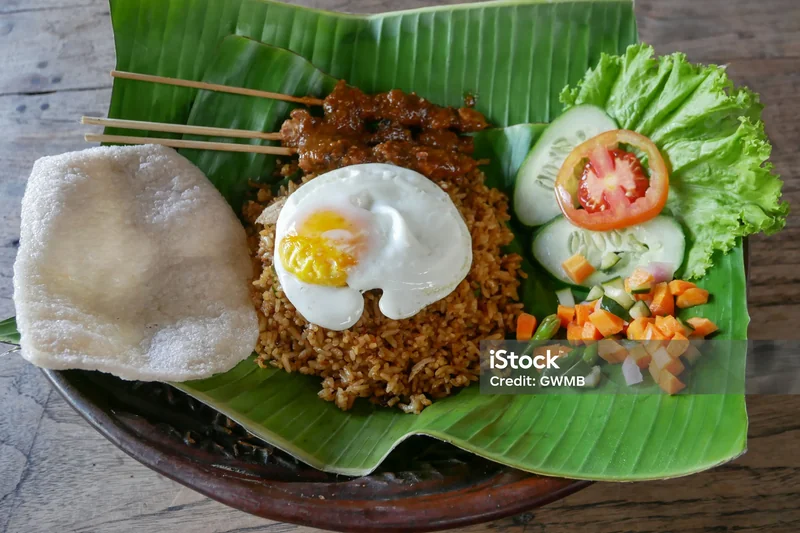
Nasi Goreng's wok-seared aroma—fragrant with garlic, shallots, and chilies—announces the start of countless Indonesian days and evenings. This humble fried rice, made from yesterday's jasmine rice stir-fried with proteins and vegetables, represents resourcefulness and flavor simultaneously. The sweetness of kecap manis mingles with umami from soy sauce and oyster sauce, creating a balanced profile that pleases everyone from street food vendors to home cooks. Its flexibility allows for endless variations while maintaining the essential technique of high heat and constant motion.
If using leftover rice, break up any clumps so that the grains are separated.
Heat vegetable oil in a large skillet or wok over medium-high heat.
Add garlic, shallot, and red chilies. Sauté until fragrant, about 1-2 minutes.
Push the aromatics to one side of the pan. Pour the beaten eggs into the empty side and scramble until cooked through.
Add the diced chicken, shrimp, or tofu, and cook until heated through.
Add the cooked rice to the pan, breaking up any remaining clumps.
Stir in the mixed vegetables and cook until they are tender.
Add soy sauce, sweet soy sauce (or honey), and oyster sauce (if using). Stir well to ensure that all the rice is evenly coated with the sauces.
Season with salt and pepper to taste.
Stir in the chopped green onions and cook for another minute.
Garnish with fresh cilantro or parsley if desired.
Nasi Goreng is fried jasmine rice stir-fried with a flavor base of garlic, shallots, and red chilies, then seasoned with sweet soy sauce and oyster sauce. Proteins like chicken, shrimp, or tofu and vegetables make it customizable and complete.
Nasi Goreng is ubiquitous throughout Indonesia, reflecting the country's resourcefulness—using leftover rice and whatever proteins and vegetables are on hand. It's equally at home in street stalls and family kitchens across the archipelago.
Essential ingredients include cold cooked jasmine rice, garlic, shallots, red chilies for heat, eggs, your choice of protein, mixed vegetables, soy sauce, sweet soy sauce (kecap manis), and oyster sauce for umami depth.
Always use day-old cooked rice—fresh rice creates mushiness. Use high heat and constant stirring for wok flavor. Scramble eggs separately before adding rice for even distribution. Toast your spice base until fragrant before adding rice. Don't overcrowd the wok.
Serve with a fried egg on top, cucumber slices, tomato wedges, and crispy shrimp crackers. A side of sambal adds heat for those who want it, and lime wedges brighten the rich rice.