FoodieAtlas
Recipes around the World
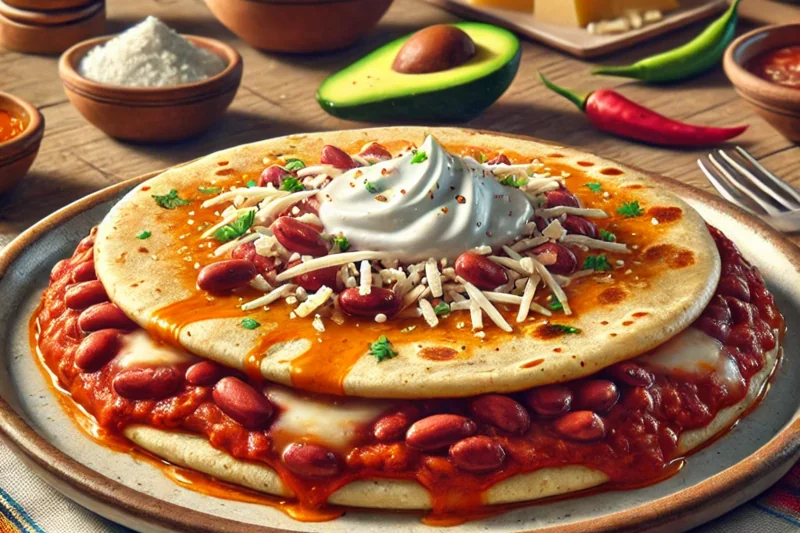
Baleadas appear on every corner in Honduras—thick, soft flour tortillas folded and filled with refried beans and salty queso fresco (or cheddar), the base that comes "simple." A good baleada has warm beans that haven't been sitting all day, cheese that hasn't hardened, sour cream that provides cooling richness, and a tortilla that's been cooked fresh, still warm enough to fold without cracking. The "special" baleada adds egg and meat, making it a complete breakfast or lunch. There's no pretense here—baleadas are working food, eaten standing at street carts before work or school, sold from dawn onward by vendors who've perfected their recipe over years.
In a large bowl, combine the flour, baking powder, and salt.
Add the vegetable oil or shortening and mix until the mixture resembles coarse crumbs.
Gradually add the warm water, mixing until a smooth dough forms. You may need to adjust the amount of water slightly.
Divide the dough into 8-10 equal portions and roll each portion into a ball.
On a lightly floured surface, roll each ball into a thin tortilla, about 6-8 inches in diameter.
Heat a large skillet or griddle over medium-high heat. Cook each tortilla for about 1-2 minutes on each side, or until lightly browned and cooked through. Keep the cooked tortillas warm in a clean towel.
In a small bowl, mix the refried beans with ground cumin if using. Warm the beans in the microwave or on the stovetop until heated through.
Spread a layer of warm refried beans onto each tortilla.
Top with grated cheese, sour cream or Greek yogurt, diced tomatoes, chopped onions, cilantro, and avocado if using.
Drizzle with hot sauce if desired.
Fold each tortilla in half to create a half-moon shape or roll it up if preferred.
Simple baleadas have just beans, cheese, and sour cream folded into a warm tortilla. Special baleadas add scrambled or fried egg and sometimes meat (ham, ground beef, or chorizo). Both are traditional and equally Honduran — simple for quick breakfasts, special for when there's more time and appetite.
Flour tortillas are sturdier and can hold the generous fillings without tearing. They're also more forgiving to cook and fold. Corn tortillas are traditional in other Central American countries, but in Honduras, thick flour tortillas are the standard for baleadas.
Yes, but they're best eaten fresh while still warm. You can make the dough ahead and refrigerate it, then cook tortillas just before serving. If reheating cold tortillas, wrap them in a damp cloth and warm them over a skillet for a moment to restore pliability.
Queso fresco (fresh cheese) or a similar crumbly cheese is most traditional in Honduras. If you can't find it, aged cheddar or Oaxaca cheese approximates the salty, mild character. Avoid pre-shredded cheese; it doesn't melt or crumble as pleasingly when warm.
Yes, vendors almost always offer pickled onions and hot sauce on the side. Some customers drizzle it on their baleada, others use it as a condiment to dip between bites. It's entirely personal preference, but having both options available is true to Honduran street food tradition.