FoodieAtlas
Recipes around the World
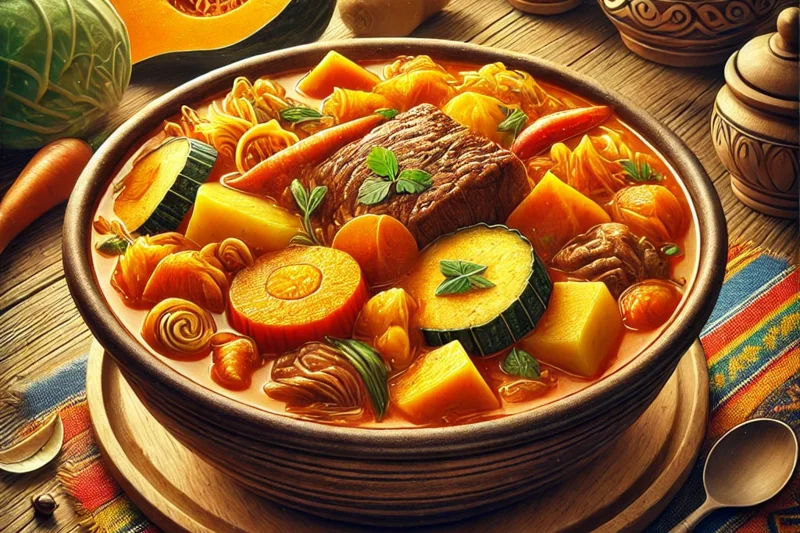
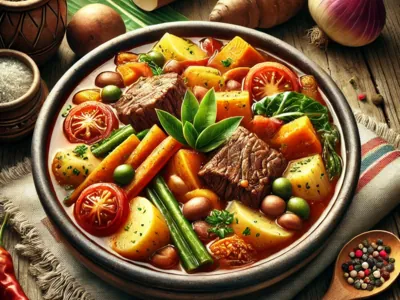
Open a pot of soup joumou and what hits you first is the deep amber color and the warm spice of cloves drifting up with the steam — a smell that has meant New Year's morning in Haiti for over two centuries. During French colonial rule, enslaved Haitians were forbidden from eating squash soup, a dish reserved for their colonizers; when Haiti declared independence on January 1, 1804, the newly free people cooked joumou and ate it publicly as an act of defiance that became annual tradition. Every first of January, families across Haiti and the Haitian diaspora from Port-au-Prince to Brooklyn cook enormous pots of this beef and butternut squash soup packed with carrots, potatoes, cabbage, and pasta, ladled out to neighbors and relatives from morning onward. UNESCO recognized soup joumou as intangible cultural heritage in 2021, acknowledging that a bowl of this soup is inseparable from the story of the first Black republic in history.
In a large pot, heat the vegetable oil over medium heat. Add the beef chunks and brown on all sides.
Add the chopped onion and minced garlic to the pot and sauté until the onion is soft and translucent.
Stir in the tomato paste and cook for a few minutes.
Pour in the beef broth, and add the bay leaf, thyme, cloves, paprika, and black pepper.
Bring the mixture to a boil. Reduce heat, cover, and let it simmer for about 45 minutes, or until the beef is tender.
Add the butternut squash, carrots, and potatoes. Continue to simmer until the vegetables are tender, about 20-25 minutes.
Stir in the chopped cabbage and cooked pasta. Simmer for an additional 10 minutes.
Season with salt to taste. Add lime juice and adjust seasoning as needed.
Garnish with chopped parsley before serving.
Serve hot with a side of crusty bread or over a bed of rice. Add hot pepper sauce if desired for extra heat.
Soup Joumou is a Haitian beef and butternut squash soup thickened with the squash itself, loaded with carrots, potatoes, cabbage, and pasta, and seasoned with cloves, thyme, and lime. It is simultaneously a complete meal and a national symbol — a dish that carries the weight of Haitian history in every bowl.
The soup has roots in French colonial Haiti, where squash soup was a dish eaten by colonizers and forbidden to enslaved people. When Haiti became the world's first Black republic on January 1, 1804, the newly free population cooked and ate joumou publicly as a declaration of freedom. UNESCO added it to the Intangible Cultural Heritage list in 2021.
Beef stew meat and butternut squash form the base, with the cooked squash blended or mashed into the broth to give it body and color. Carrots, potatoes, cabbage, and short pasta (macaroni or broken spaghetti) go in, along with cloves, thyme, garlic, onion, and a generous squeeze of lime juice to finish.
Brown the beef well before adding liquid — the fond on the bottom of the pot becomes the backbone of the broth. Blend or push about a quarter of the cooked squash back into the soup to thicken it naturally without flour. Add the pasta last so it doesn't turn mushy while the vegetables finish cooking.
Soup joumou is traditionally a standalone meal — thick enough to need nothing more than a slice of crusty Haitian bread or a roll of kasav (cassava flatbread) for dipping. Many families also set out pikliz on the side for those who want extra heat in their bowl.