FoodieAtlas
Recipes around the World
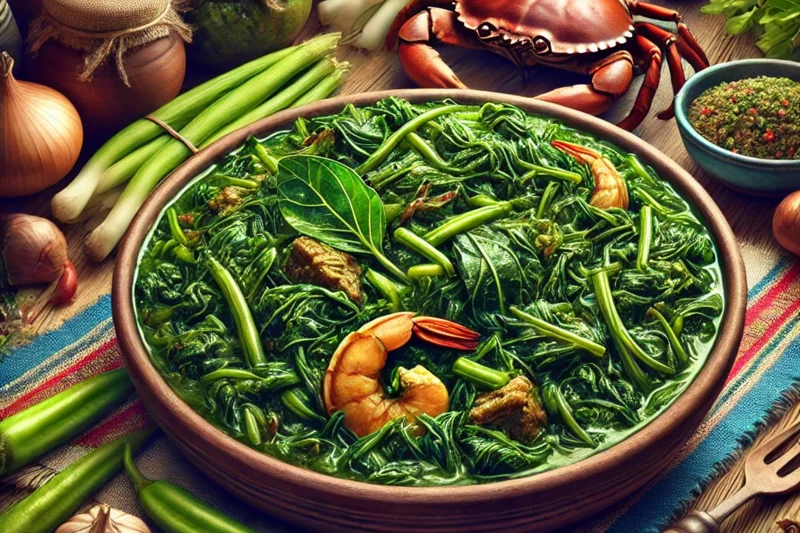
Lalo arrives at the table a deep forest green, thicker than a soup but thinner than a paste — the jute leaves have broken down in the heat and their natural mucilage gives the broth a silky, almost slippery consistency that is unlike any other Haitian dish. Jute (Corchorus olitorius), the plant whose fibers make burlap, is also an ancient West African food crop brought to Haiti during the slave trade, and Haitian lalo is a direct descendant of similar leafy stews still made from the same plant in Benin, Nigeria, and Egypt. The leaves are cooked low and slow with pork or crab (sometimes both), allspice, Scotch bonnet, and garlic until the greens are completely soft and the fat from the meat has blended into the sauce. It is a weekday dinner in most Haitian households — ladled over white rice and eaten without ceremony, though it rewards good ingredients and patience more than any quick dish can.
Wash the lalo leaves thoroughly and chop them if necessary. If using spinach, wash and chop as well.
Season the pork (or beef) pieces with salt, black pepper, thyme, allspice, and paprika.
Heat vegetable oil in a large pot over medium heat.
Add the seasoned meat to the pot and cook until browned on all sides, about 5-7 minutes.
Remove the meat from the pot and set aside.
In the same pot, add the chopped onion, garlic, bell pepper, and tomatoes. Cook until the vegetables are soft, about 5 minutes.
Stir in the tomato paste and cook for another 2 minutes.
Return the browned meat to the pot and pour in the water or beef broth. If using, add the bouillon powder for extra flavor.
Bring to a boil, then reduce heat and let simmer for about 30 minutes, or until the meat is tender.
Add the lalo leaves (or spinach) to the pot and cook for another 10-15 minutes, until the leaves are tender and well integrated with the meat and sauce.
Adjust seasoning with additional salt and pepper if needed.
Garnish with chopped fresh parsley or scallions before serving.
Lalo is a Haitian stew made from jute leaves (Corchorus olitorius) slow-cooked with pork, crab, or both. The leaves break down in the heat, releasing a natural mucilage that thickens the sauce into a silky, deeply savory green stew unlike any other dish in Haitian cooking.
Lalo is directly descended from West African leafy stews brought to Haiti via the Atlantic slave trade. Jute leaves are used in identical ways today in Benin (where the dish is called gboman), Nigeria, Egypt (molokhia), and across Central Africa — Haiti's lalo is the Caribbean branch of the same ancient culinary tradition.
Fresh or frozen jute leaves are the base — spinach is a distant substitute but lacks the thickening mucilage. Pork shoulder, crab legs, or a combination provide the protein and fat that give the sauce richness. Allspice, Scotch bonnet, garlic, onion, and thyme build the flavor foundation that every Haitian lalo starts from.
If using fresh jute leaves, strip the stems — they stay tough even after long cooking. Fry the pork pieces hard before adding the leaves so there is rendered fat in the pot; that fat carries the spice flavors and is the difference between a flat and a deep lalo. The stew should cook at a gentle simmer, never a rolling boil, to keep the texture silky.
Lalo is always served over plain white rice — the stew's thick sauce is designed to coat the grains and the combination is the complete dish. Banane peze alongside adds textural contrast. Some families also serve diri kole (rice and beans) when lalo is the center of a more elaborate spread.