FoodieAtlas
Recipes around the World
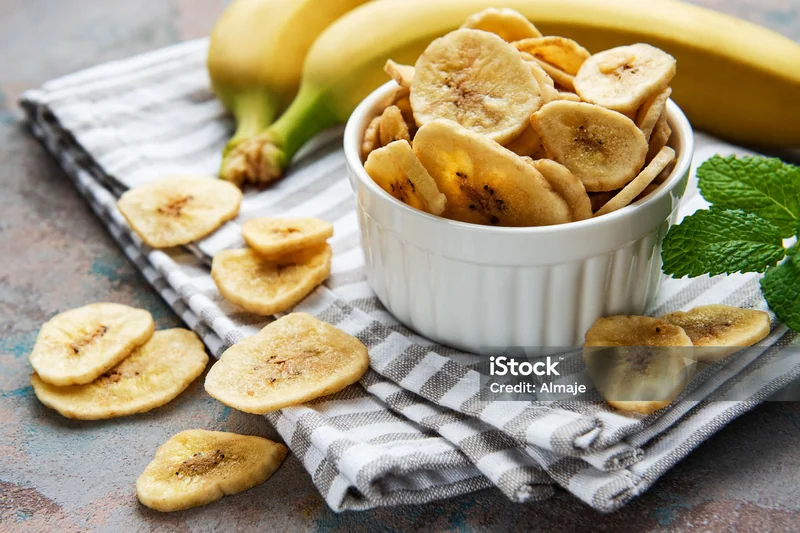
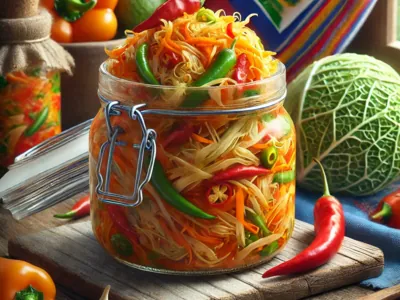
A properly made banane peze comes out of the oil with a pale gold crust that shatters when you bite through it, giving way to a starchy, slightly sweet interior that tastes nothing like the soft ripe plantains used in other dishes. Green plantains are sliced into thick rounds, fried until just barely cooked through, then pressed flat with a tostonera or the bottom of a heavy pan and plunged back into hot oil for a second fry that creates the crispy, lacy edges. The technique traveled to Haiti from West Africa, where versions of twice-fried starchy vegetables existed before the Atlantic trade routes were established. On a plate beside griot and rice, banane peze is not optional — it is structural, there to absorb the juices and be scooped through the pikliz.
Peel the green plantains by cutting off the ends and making a lengthwise slit in the skin. Remove the skin and slice the plantains into 1/2-inch thick rounds.
Heat about 1/2 inch of vegetable oil in a large skillet over medium heat.
Add the plantain slices to the hot oil in batches, frying until they are golden brown and slightly crispy, about 2-3 minutes per side. Remove with a slotted spoon and drain on paper towels.
Place a plantain slice between two pieces of parchment paper or plastic wrap. Use a flat object, like a skillet or a meat mallet, to gently flatten the plantain slice to about 1/4 inch thickness.
Return the flattened plantains to the hot oil and fry again until crispy and golden brown, about 1-2 minutes per side.
Remove the plantains from the oil and drain on paper towels. Season with salt while still hot.
Banane Peze — literally "pressed plantain" in Haitian Creole — are twice-fried green plantains that go through a two-stage cooking process: a first fry to cook the interior, then pressing flat and a second fry to create a thin, crispy, ridged exterior. The result is something between a chip and a flatbread in texture.
The technique of twice-frying green plantains is shared across much of the Caribbean and parts of West Africa and Latin America, but Haitians call their version banane peze and always use unripe green plantains — never the ripe yellow ones, which cook differently and lack the starchy density needed for the press. The dish is central to Haitian street food culture.
The only ingredients are green (unripe) plantains, vegetable oil, and salt — the quality of the plantain determines everything. They must be fully green; even slightly ripened plantains will be too soft and sweet to achieve the characteristic crunch after the second fry.
Keep the oil at a steady medium heat for the first fry — too hot and the outside browns before the center cooks through. After pressing, increase the oil temperature slightly so the second fry crisps fast and doesn't absorb excess oil. Salt immediately out of the oil while the surface is still hot and receptive.
The classic Haiti plate is griot alongside banane peze and diri kole, with a spoonful of pikliz over everything. Banane peze also works as a base for toppings — piled with slow-cooked beans and a fried egg is a common Haitian breakfast. On its own with a small bowl of pikliz for dipping it makes a satisfying street snack.