FoodieAtlas
Recipes around the World
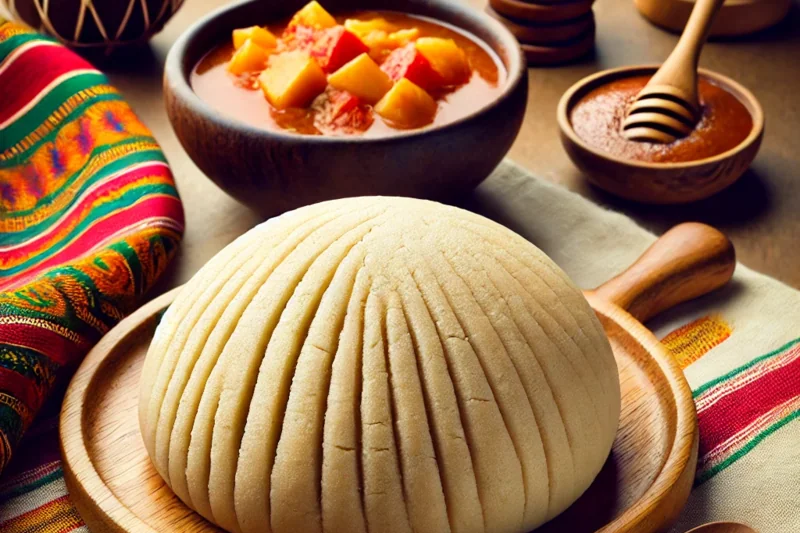
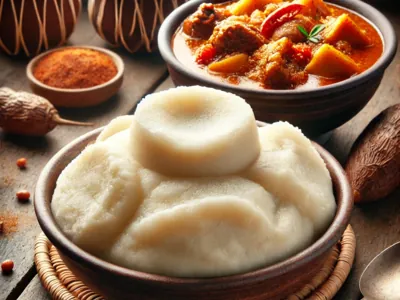
Kokonte has a dense, almost grainy texture that's completely unique—cassava flour stirred into a smooth paste that's firm enough to hold its shape on a plate. This is humble food, the kind that sustained generations and still appears on Ghanaian tables as a foundation for soup. Called "the food for the strong" by those who understand its nutritional power, kokonte is economical and filling. Paired with groundnut soup or light soup, it becomes a complete, satisfying meal that costs little but delivers real comfort.
In a large pot, bring the 4 cups of water to a boil over medium heat.
In a bowl, mix the kokonte flour with a small amount of water to form a smooth paste. This helps to avoid lumps when adding it to the boiling water.
Once the water is boiling, reduce the heat to low.
Gradually add the kokonte flour paste to the boiling water, stirring constantly with a wooden spoon or a whisk to prevent lumps.
Continue stirring the mixture until it thickens and starts to pull away from the sides of the pot. This should take about 5-10 minutes.
If using, stir in the palm oil or vegetable oil for added flavor.
Cover the pot and let the kokonte cook over low heat for an additional 10-15 minutes, stirring occasionally. The kokonte should have a firm, smooth texture when done.
Transfer the kokonte to a serving dish. It can be served hot or at room temperature.
Making a paste with water first ensures the kokonte flour doesn't clump when it hits boiling water. If you dump dry flour into boiling water, you'll end up with lumps that are impossible to smooth out.
Kokonte should be firm enough to hold its shape on a plate but smooth throughout, almost like a very dense polenta. It should pull away from the pot sides when you stir.
Palm oil gives authentic Ghanaian flavor, but vegetable oil works if you don't have it. The oil isn't strictly necessary but adds richness and depth to the kokonte.
Groundnut soup, light soup, and okra soup are traditional pairings. Essentially, any soup rich enough to dip kokonte into works perfectly.
Kokonte hardens as it cools, which is fine. You can reheat it by microwaving with a splash of water or gently warming it in a pot over low heat, stirring occasionally.