FoodieAtlas
Recipes around the World
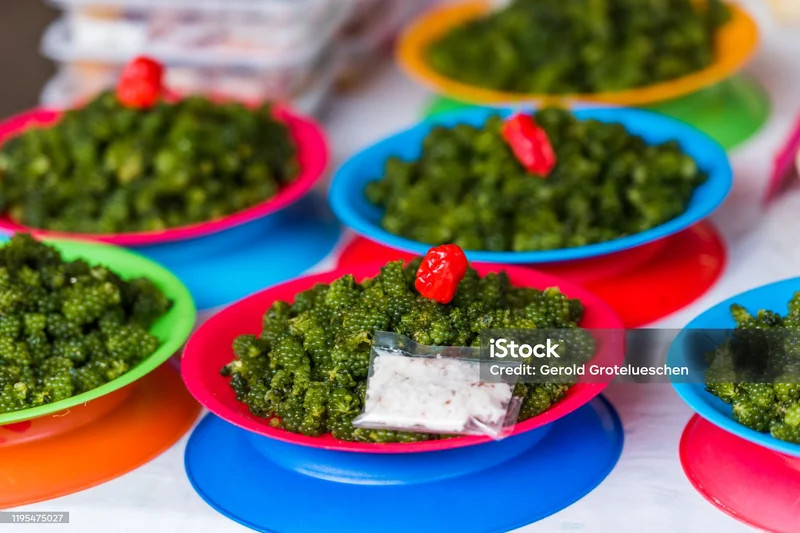
Nama's bursts of briny, umami flavor are like edible caviar that crackles between your teeth with each bite. The seaweed thrives in Fiji's warm coastal waters and has been harvested for generations by island communities. This salad celebrates minimalism—just nama, lime juice, soy sauce, sesame oil, and a touch of heat from fresh chili. The preparation is almost meditative, requiring only rinsing and gentle tossing to let the ingredients speak for themselves.
Rinse the nama thoroughly under cold water to remove any impurities or sand.
In a small bowl, combine the lime juice, soy sauce, sesame oil, minced ginger, and chili pepper (if using). Mix well.
Place the rinsed nama in a serving bowl.
Pour the dressing over the nama and gently toss to coat.
Garnish with chopped fresh cilantro.
Asian markets, particularly Japanese or Filipino specialty stores, often stock nama (also called sea grapes or umibudo). Check the refrigerated seafood section. Some online retailers also sell frozen nama.
Fresh nama keeps best in the refrigerator in a sealed container filled with water or brine, changed daily. It will keep for up to a week. Frozen nama can be thawed and used immediately without cooking.
Sesame oil adds authentic flavor, but a light olive oil works in a pinch. However, avoid heavy oils that would overwhelm nama's delicate, briny taste. The point is to enhance, not mask.
Each tiny nama sphere looks like a small caviar egg and pops similarly when bitten, releasing a burst of briny, oceanic flavor. The texture and presentation earned it this evocative nickname.
Nama is always served raw and requires no cooking. It's simply rinsed and dressed. Cooking would destroy its signature texture and delicate flavor, making it just another seaweed rather than a special delicacy.