FoodieAtlas
Recipes around the World
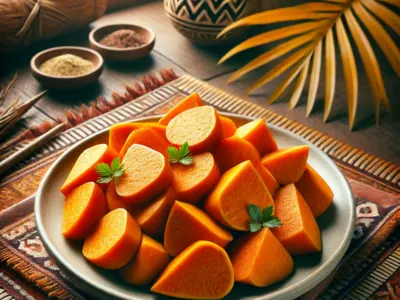
When the banana leaves are unwrapped, steam rises carrying the aroma of earth-cooked meat infused with smoky sweetness from the pit's hot stones. Lovo is Fiji's most theatrical cooking method, requiring preparation of an underground oven lined with rocks and fired for hours. The wrapped bundle of pork, taro, kumala, and pumpkin emerges tender and falling apart, everything mingling together in its own broth. What makes lovo irreplaceable is the subtle smoke that earthen cooking imparts—something no oven can truly match.
Peel and cut the taro, kumala, and pumpkin into chunks.
Season the meat with salt, black pepper, paprika, ground cumin, and ground coriander.
Traditionally, lovo is cooked in an underground oven. If using a traditional lovo pit, heat the stones and prepare the pit for cooking. Alternatively, you can use a covered grill or oven.
If using banana leaves, cut them into large pieces and briefly wilt them by placing them over a hot flame or in boiling water.
Lay out the banana leaves or aluminum foil on a flat surface.
Place the seasoned meat in the center, followed by the taro, kumala, and pumpkin chunks.
Add the chopped onion and minced garlic on top of the vegetables and meat.
Drizzle with vegetable oil or coconut oil.
Fold the banana leaves or aluminum foil to wrap the contents securely.
Place the wrapped bundle in the lovo pit or on a covered grill.
If using an oven, place the wrapped bundle in a roasting pan and cover with foil.
Cook for 1.5 to 2 hours, or until the meat and vegetables are tender.
Carefully unwrap the banana leaves or foil.
Garnish with fresh herbs if desired.
A traditional lovo pit requires heating stones and digging, which isn't practical for most home cooks. A covered grill or oven works well as a substitute, though it won't achieve the exact smoky flavor of earth-cooking. The taste and technique remain authentic even without the pit.
Banana leaves add authentic flavor and help trap steam for even cooking. If you must use foil, the dish will cook fine but lose some of the subtle, leafy notes that characterize traditional lovo.
Beyond 2-3 hours for pit preparation and cooking, plan for at least 30 minutes prep work. Many families consider lovo a special occasion dish precisely because of its time commitment.
Yes, cassava and breadfruit are traditional alternatives. However, avoid watery vegetables like zucchini that would release too much liquid and dilute the flavors during long cooking.
Traditionally lovo feeds many people, but you can scale it down. Even making lovo for a small group is worthwhile since the effort itself is a celebration, and sharing food is central to Fijian culture.