FoodieAtlas
Recipes around the World
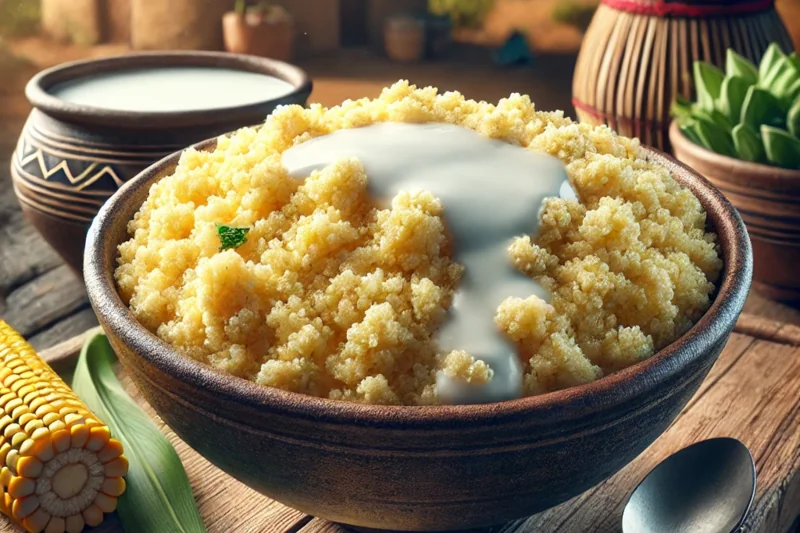
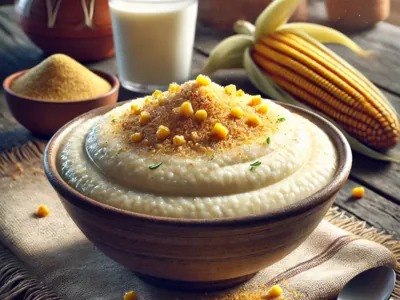
Uphuthu tastes of ground maize, not softened by cream or butter but made crunchy and slightly toasted as it cooks, its texture distinctly separate and granular rather than smooth and unified. Unlike softer corn porridges, Uphuthu is cooked until the water is fully absorbed and the maize takes on a nutty, roasted flavor from the friction of constant stirring. Swazi people serve it alongside rich, slow-cooked stews where the gravy soaks into the dry, porous crumbles and transforms them into something completely different with each bite. The simplicity is its power—just corn, salt, and water, yet the finished dish carries depth and satisfaction that come only from patience and proper technique.
In a large pot, bring the water to a boil. Add the salt and sugar (if using).
Gradually stir in the maize meal, whisking continuously to prevent lumps.
Reduce the heat to low and cook the mixture, stirring frequently, for about 15-20 minutes, or until it thickens and the maize meal is fully cooked.
Stir in the butter or vegetable oil if desired, for added richness.
Transfer the Uphuthu to a serving dish. Let it cool slightly before slicing or serving.
Enjoy your meal!
Uphuthu is a traditional dish made from maize meal, cooked until thick and fluffy. It's a popular snack in Eswatini.
Uphuthu originates from Eswatini, where it is cherished as a staple food.
The main ingredients are maize meal, water, salt, and optionally, sugar and butter or oil.
Uphuthu takes about 20-30 minutes to prepare.
Uphuthu is often served with savory stews, vegetables, or enjoyed plain with a sprinkle of sugar.
While both are cornmeal-based porridges from Southern Africa, Uphuthu is cooked longer and becomes drier and crumblier, with a nuttier flavor. Ugali is smoother and more cohesive. Uphuthu's texture is deliberately loose so it absorbs stew and sauce, whereas Ugali is dense enough to eat with your hands.
Constant stirring prevents lumps from forming and helps the maize meal cook evenly. It also allows the water to release gradually and the maize to toast slightly from the friction, developing that characteristic nutty flavor that distinguishes good Uphuthu from mediocre versions.
Uphuthu is best eaten fresh, though it can be made a few hours ahead and gently reheated with a splash of water. As it cools, it becomes even drier and crumbly, which some prefer but others find too dense.
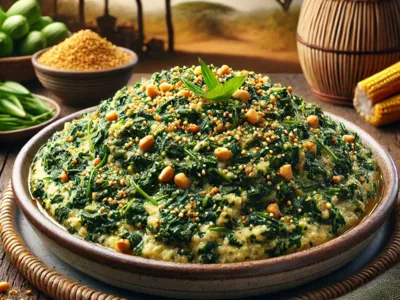
Rich, saucy stews are ideal: beef stews, bean stews, or greens cooked in sauce. The sauce soaks into the Uphuthu's crumbly structure, creating a complete dish. Swazi cooks serve it with whatever slow-cooked protein or vegetable stew is on the table.
While savory with a stew is traditional, some Swazi people enjoy Uphuthu with a sprinkle of sugar, salt, and a bit of butter as a snack or light meal. The sweet version is less common but shows the versatility of this humble staple.